How to Choose a Perforated Metal Wall That Won't Fail in Your Parking Garage
Posted 2026-08-31 by Jane Smith
Picture this: you're standing in a metal supply yard, comparing two perforated panels that look nearly identical. Both have the same tidy hole pattern, the same brushed finish, the same promise of an airy, modern parking garage. One is priced to keep your project on budget. The other costs noticeably more. Which one do you bolt to the wall? That choice feels like a simple cost question, but it's really a bet on how long that wall will survive. Parking garages are brutal environments. Road salt, salt spray, constant moisture, and vehicle exhaust attack every exposed surface. The panel that saves you money today might be the panel that forces a shutdown and replacement in a couple of years. This article walks you through the material and design decisions so you can choose a perforated wall that still looks good when the warranty is long gone.
A Wall That Works: The Hidden Decision
Walk through any parking garage that's a few years old and you'll spot the problem: stains running down panels, rust blooms around the holes, edges that look like they've been chewed. Why does that happen? Because a garage is not a dry warehouse. Every day, cars bring in rain, snow, slush, and road salt. The exhaust from idling engines adds moisture and chemicals. The ventilation system works constantly, and the walls are in the airflow. So that perforated wall isn't just decoration — it's part of the building's lungs. It has to let carbon monoxide out and fresh air in, which means it has to be open enough to breathe, but still strong enough to stand up to carts, ladders, and the occasional collision. That combination of demands turns a seemingly simple product choice into a real engineering decision. The perforation pattern affects airflow; the metal grade determines whether the wall lasts. Most buyers default to the cheapest material that looks right. That default is exactly where the trouble starts. So how do you choose a metal that will actually survive?
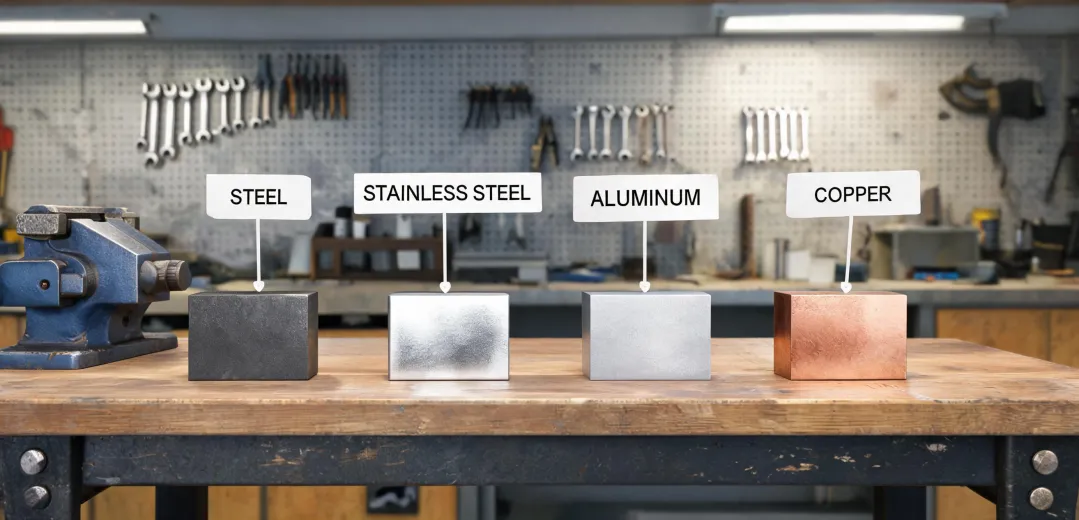
Here's the core tension: every material option has a different balance of price, strength, corrosion resistance, and weight. Painted carbon steel is affordable and strong, but its protection depends on a coating that can scratch, chip, or blister in the presence of salt. Galvanized steel adds a zinc layer that extends life, but cut edges and drilled holes expose the underlying steel. Aluminum is lightweight and naturally resistant to corrosion, yet it's soft enough to dent from a shopping cart or a careless driver. Stainless steel is the heavy hitter for corrosion, but its price climbs quickly with the alloy content. That's why the metal you choose isn't just a line item on the invoice — it's a prediction of when the wall will need to be replaced. If you pick a material that can't handle the local conditions, you're not saving money; you're just deferring the bill and adding the cost of installation labor, demolition, and disposal. The real question is not what the panel costs today, but what the wall costs over its whole life.
Aluminum, Steel, or Stainless?
Let's put the three main categories side by side. Aluminum is the lightweight option. It won't rust in the traditional sense, and it's easy to cut and handle on site. But it's also easy to dent, and in parking structures, dents are almost guaranteed — from carts, ladders, equipment, and even heavy snow loads leaning against panels. Mild steel, often painted, is the budget choice. It has the strength to resist impacts, and a well-maintained paint system can look good for years. The catch is maintenance: once the paint is scratched, salt and moisture find the bare steel and start the corrosion process. Stainless steel sits at the other end of the spectrum. It costs more, but it's far more forgiving in damp, salty conditions. Within stainless steel, though, there are grades that perform very differently. The most common in architectural work are 304 and 316. Both look almost identical in a brochure, but their chemistry tells a different story.
The difference comes down to one element: molybdenum. Grade 316 stainless steel contains roughly 2 to 3 percent molybdenum, which gives it the ability to resist chloride-based corrosion. Grade 304 does not. Chlorides are the enemy here — they're the ions in road salt and sea spray that attack the passive oxide layer on stainless steel. In a parking garage near a coast or in a northern climate, chlorides are constantly present. That's why the choice between 304 and 316 is not a minor upgrade; it's a matter of whether the metal can hold up to the environment. The evidence from real-world failures makes this concrete: a chemical processing facility in Shandong Province installed 304 stainless steel cooling headers for a seawater heat exchange system. The procurement team chose 304 to save roughly $12,000 on material costs. But the pipe walls suffered complete chloride pitting in less than 18 months. The facility then spent approximately $47,000 on the entire process of shutdown, replacement, and hazardous waste disposal. The expected savings vanished. For a garage wall exposed to salt spray or deicing chemicals, the same corrosion mechanism applies. The metal that looks fine on day one can fail long before you expect it.
The Salt Test Changes Everything
Stop and think about what actually lands on your garage walls. In coastal areas, salt spray hangs in the air and settles on every surface. In cold regions, deicing salt is spread on roadways and then carried into the garage on tires, undercarriages, and snow clumps. Once inside, that salt mixes with water dripping from cars, creating a persistent brine that never fully dries. That brine is extremely aggressive. It doesn't need to be submerged to cause corrosion; a thin film of saltwater on a metal surface is enough to start the process. For a perforated wall, the danger is even higher because the holes create edges and crevices where moisture collects and chlorides concentrate. So the question is not 'if' your wall will be exposed to salt, but 'how much' and 'for how long'. If you're building in the Sun Belt, you might dismiss salt as someone else's problem. But road salt is used in more places than you think, and even in mild climates, marine influence can reach miles inland. The prudent assumption is that your wall will see chlorides at some point in its life.
The practical importance of the 304 vs 316 choice becomes obvious with the case we just described. A plant in Shandong Province chose 304 stainless steel cooling headers to save money, expecting them to last for years in a seawater environment. Instead, the chloride pitting was so severe that the pipe walls failed in less than 18 months. The total cost of shutdown, replacement, and hazardous waste handling was roughly $47,000 — far more than the $12,000 they had saved on the original material. Now map that onto a parking garage wall. Your wall won't be full of pressurized seawater, but it will be constantly wetted by salt-laden water dripping from cars. The same chloride attack happens, just more slowly. You might not see obvious rust for a year or two, but the pitting and crevice corrosion will eventually weaken the panel, stain the surrounding concrete, and require replacement. The lesson is not that 304 is unusable; it's that 304 has limits. When you are in a chloride environment, the low-cost choice can become the high-cost choice within the first service interval.
The 30% Premium That Can Save You Later
Now let's talk about the price gap. The evidence is clear that 316 stainless steel typically costs 30 to 40 percent more than 304. On a typical parking garage wall, that premium might translate to thousands of dollars in material cost. It's an easy number to quote in a budget review, and it can sway a decision toward 304. But the comparison shouldn't stop at the invoice. The same evidence shows that the cost of corrosion failure can be several times higher than the savings. In the chemical facility case, a $12,000 saving turned into a $47,000 loss, not counting the disruption and downtime. Even if your garage wall is a smaller scale, the ratio holds: replacement means removing the old panel, disposing of it, manufacturing a new one, paying for installation and scaffolding, and potentially dealing with warranties and safety concerns. That easily blows past the 30 to 40 percent you were trying to save. So when you compare 304 and 316, you're not comparing two similar products with a modest price difference. You're comparing a product that may need replacement in a harsh environment with one designed to survive it.
Here's a better way to think about it. The true cost of any material is the initial price plus the cost of maintenance, repair, and replacement over the intended life of the building. A parking garage is designed to last 50 years or more. The metal wall is not a sacrificial component that you plan to swap out every decade; it's part of the building structure and appearance. If you choose a cheaper metal that starts to fail in five years, you pay for early replacement and you also lose the wall's functional benefits — reduced ventilation, or worse, falling panels. The total cost of ownership argument says that the premium for 316 is not a luxury; it's an insurance policy that pays off almost immediately in adverse conditions. In environments with modest chloride exposure, 304 may be perfectly adequate and the premium unnecessary. The key is to match the material to the actual severity of the environment, not to the initial price tag. That matching is what separates a smart purchase from a reactive one.
How Open Should the Wall Be?
The material is only half the story. The other half is the perforation pattern itself. How big should the holes be? How much of the panel should be open? And how thick does the metal need to be? These choices affect ventilation, light, and strength, and they're often made by aesthetic preference alone. But they deserve the same analytical attention as the metallurgy. For example, a wall with large, widely spaced holes might let a lot of air through but offer little visual screening; a wall with tiny, closely spaced holes looks more solid but restricts airflow. The open area percentage, which can range from 20 to 60 percent depending on design, determines how much air and light pass through. The structural stiffness comes from both the sheet thickness and the remaining metal between the holes. If you push the open area too high, the panel can flutter, deform, or fail under wind loads or impact. So the question is: what does your garage actually need from the wall?
The answer depends on your ventilation strategy. A naturally ventilated garage needs more open area to keep carbon monoxide levels down, especially during peak traffic. A mechanically ventilated garage might allow a tighter pattern because fans handle the air exchange. Similarly, if the wall faces a street or pedestrian area, you might want smaller holes for privacy or light control. The geometry also interacts with corrosion. Larger holes expose more edge area, and edges are where coatings wear and corrosion starts. Thicker metal can extend the time it takes for corrosion to penetrate, but it also adds weight and cost. A practical approach is to select a perforation design that gives you the airflow and appearance you need while keeping the open area conservative enough to preserve strength. Many suppliers offer standard patterns with documented open areas, so you can compare them objectively rather than guessing. The right geometry is the one that meets your functional requirements without compromising the material's ability to do its job.
A Simple Rule for Your Next Wall
Once you've made the material and design decisions, the practical side is buying the metal. Metal Supermarkets is the world's largest small-quantity metal supplier, with over 135 brick-and-mortar stores across North America and instant access to more than 8,000 types, shapes, and grades of metal. That scale matters for a project like this: you can buy exactly the number of perforated panels you need, cut to size, without paying for full sheets you don't use. The company has served more than 250,000 customers and can source rare metals quickly. For a parking garage renovation, that means you can get the specific grade you've chosen — whether it's 304 or 316 — and have it delivered fast. The availability of these metals in small quantities, with no minimum order, takes the risk out of specifying the right material. You don't have to settle for what a big supplier has in stock; you can order precisely what your environment demands.
Here's a simple rule to apply. First, identify whether your garage is in a coastal zone or uses deicing salts. If yes, choose 316 stainless steel for any perforated wall that will be exposed to the elements. The 30 to 40 percent price premium is your insurance against a failure that can cost several times more. If your garage is inland and sees little salt, 304 stainless steel may be sufficient, but still avoid plain painted steel unless you're committed to a maintenance schedule. For all applications, verify the open area and thickness against your ventilation requirements and structural loads. When you buy, use a supplier that can deliver the exact grade and size without waste. The decision rule reduces to this: match the metal to the worst conditions you realistically expect, don't match it to your first-year budget. Your garage wall is a long-term component, and choosing a durable material is the cheapest way to protect it.
So when you're back in that supply yard, looking at two nearly identical panels, don't just check the price tag. Ask what the wall will face, and then let the environment make the call. If salt is in the picture, the higher price tag is a sign of survival. If it's not, you can spend the savings elsewhere. That's the rule: the material you choose should outlast the building's mortgage, not just its warranty.

Jane Smith
I’m Jane Smith, a senior content writer with over 15 years of experience in the packaging and printing industry. I specialize in writing about the latest trends, technologies, and best practices in packaging design, sustainability, and printing techniques. My goal is to help businesses understand complex printing processes and design solutions that enhance both product packaging and brand visibility.