Stainless 316 or Budget Metal for a Parking Garage Perforated Wall?
Posted 2026-09-09 by Jane Smith
-
Should That Perforated Wall Be 316 Stainless or the Budget Option?
-
What a Parking Garage Wall Actually Endures — Beyond Looks
-
Perforated Choices: Carbon Steel, Galvanized, Aluminum, and Two Stainless Grades
-
When Does Chloride Force Your Hand? A Threshold Rule for 316
-
Final Ruling: Write the Spec Around Chloride, Not Around Metal Fashion
Picture the same parking garage wall with two different specs on your desk. One line item is 316 stainless perforated sheet, with a price that makes the project manager wince. The other is an economy-grade metal panel—same open area, same sight line, same coated finish in the render—at a number that feels responsible. The cheaper panel will not fail next month, and it may not fail this year. The question is whether it survives the first decade of slush, splash, and road salt without turning into a rust-streaked replacement project. A wall that looks identical on paper is not identical in a chloride environment, and that gap is where budget decisions quietly reverse.
Should That Perforated Wall Be 316 Stainless or the Budget Option?
First cost is the wrong measure for a chloride-exposed parking garage wall. If the structure sits in a region where roads are salted every winter, the wall is not a decorative screen; it is a collector for chloride-laden runoff that drips, sprays, and puddles at the base. If the ramp is dry and inland, with no coastal salt and no deicing program, it may never see the chemistry that punishes cheaper metals. That is why the smart comparison ignores the render and looks at two numbers: the first bid and the cost per year of service. A premium stainless panel can carry a hefty upfront number, but that number pays for corrosion resistance at every cut edge and fastener. The economy metal carries a small upfront number and a promise that may not survive twenty winters. Both panels can meet the same architectural drawing, and both can look neutral for two or three seasons. The difference appears later, on the maintenance schedule, where one panel stays quiet and the other starts explaining itself with rust streaks. Should that perforated wall be 316 stainless or the budget option? Only the chloride load can answer that.
The risk is not theoretical; chloride has already produced exactly this reversal in an industrial setting. A chemical processing facility in Shandong Province installed 304 stainless cooling headers for a seawater heat exchange system in 2024, choosing the lower grade to save roughly $12,000 on material costs. The pipes suffered complete chloride pitting in less than 18 months. Shutdown, replacement, and hazardous waste disposal ran about $47,000, roughly four times the original saving. The lesson is not that 304 is always a bad metal; it is that chloride changed the equation so fast that the cheaper first cost became the expensive choice. A parking garage wall is not a seawater heat exchanger, but it shares the same trigger: chloride in water that contacts the metal and lingers. Road salt concentrates in meltwater, and garage washdowns keep that water moving across the wall. The same pitting mechanism that killed the headers can start at a perforation edge and spread under a coating that was never designed for that chemistry. It is the reason a specification should ask which grade sits behind the hole pattern, not just which finish matches the sample board.
What a Parking Garage Wall Actually Endures — Beyond Looks
A parking garage wall is a splash zone with a roof, not a facade in a benign climate. It is hit by tire spray carrying dissolved salt, by runoff that sheets down the ramp, and by condensation that forms when warm humid air meets a cold panel. The wall base sits in puddles that never fully dry; upper panels collect a film of grime mixed with deicing chemicals. Add abrasion from snow plows, carts, and parked cars, plus metal-on-metal contact where panels meet supports. Coatings that look fine on a sample can be scratched, chipped, or worn through, and every scratch is an entry point for moisture. In a coastal garage, airborne salt lands on every surface; in a snow-belt garage, deicing salt is concentrated in meltwater and stays where the water lingers. None of this shows in a photograph, but all of it decides how long a perforated panel stays sound. The profile matters because corrosion is not uniform; it begins where chlorides collect and remain wet.
Perforation makes that environment worse in ways a solid panel never experiences. Punching holes exposes bare metal at every edge, and those edges are exactly where chlorides concentrate and stay damp. A solid sheet protects its back; a perforated sheet multiplies the number of cut-metal boundaries where the coating is thinnest or absent. In chloride chemistry, this is where 304 and 316 part ways. The 304 grade handles ordinary atmospheric conditions well, but it is not engineered for saltwater or high-chloride industrial exposure; 316 exists because of that gap. That does not mean 304 is unusable anywhere; it means the grade decision should start at the edge of a hole, not at the center of a panel. For a parking garage with salted slush sitting against the lower course, the cut edges can behave the way the seawater headers did: they pit, they streak, and they turn a simple wall into a maintenance line item the budget never planned. That is the failure mode the premium grade is designed to interrupt.
Perforated Choices: Carbon Steel, Galvanized, Aluminum, and Two Stainless Grades
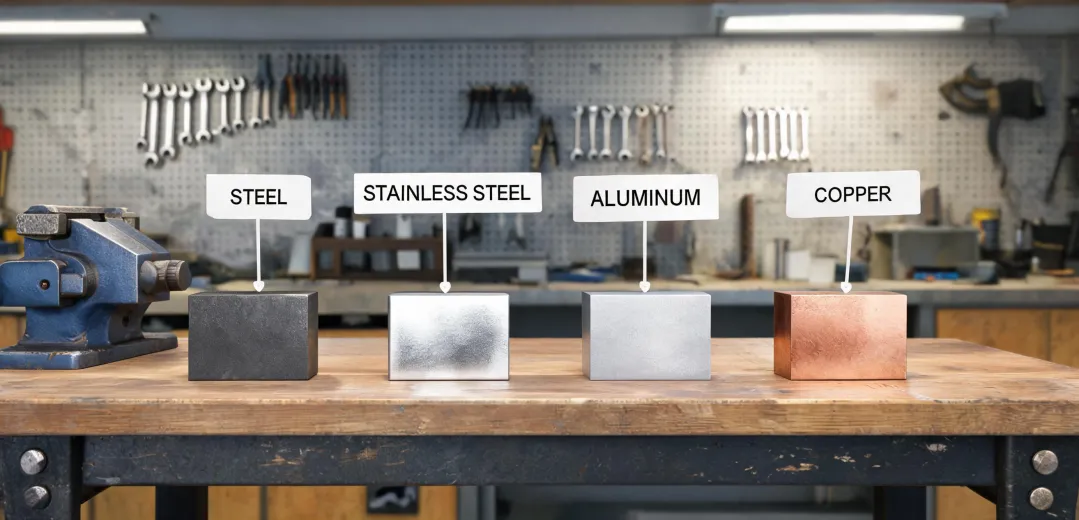
For a parking garage perforated wall, the realistic choices are carbon steel, galvanized steel, aluminum, and the two stainless grades most commonly specified, 304 and 316. A metal supply specialist can source all of them in perforated form, which matters more than it sounds because a project rarely needs one perfect full-sheet size. A supplier that carries over 8,000 types, shapes and grades of metal and offers cut-to-size service changes the procurement picture: you can order exactly the panel sizes the wall needs instead of buying stock sheets and adding waste. With over 135 brick-and-mortar stores across North America, grade selection is an engineering decision rather than a stocking accident. That availability pulls the comparison back to material performance. If all candidates are equally easy to buy, the differentiator is not supply chain; it is what happens after ten winters. The same catalog page can list a coated steel panel next to a 316 sheet, and the choice between them should be made on exposure, not on whatever happens to be in stock.
Grade 316 is not a visual upgrade; it is a molybdenum-based answer to chloride pitting. The common misreading is that all stainless steel sits in one corrosion-proof family, and the material evidence undercuts that assumption. Within the stainless family, 304 and 316 look alike on a sample board but behave differently where chlorides are present. The distinguishing element is 316's added 2 to 3 percent molybdenum, which improves resistance to chloride pitting. 304 protects against normal atmospheric conditions and low-level chemical exposure; 316 is intended for marine environments, saltwater, and high-chloride industrial use. That distinction is metallurgy, and it shows up first at cut edges, which makes it directly relevant to a perforated wall. The 30 to 40 percent premium for 316 over 304 is easy to find in any quote; the cost of the alternative appears later, when a lower-grade panel begins to pit and the repair bill dwarfs the original saving. A garage wall never needs to be submerged to enter that risk zone; chloride-laden runoff pooling at the base is enough to start the same reaction. Yet this is not a blanket demand for 316. If the building sits in a mild, low-chloride setting, 304 with a good finish can provide years of service for less money, and aluminum offers a different corrosion profile. The point of the contrast is to keep the spec focused on the microclimate: where salt arrives, molybdenum content is not optional; where salt does not arrive, the extra alloy is insurance you may never cash.
When Does Chloride Force Your Hand? A Threshold Rule for 316
Apply a two-part rule for selecting 316: chloride geography plus service life. If the garage is in a deicing-salt region or within reach of coastal salt air, and the wall is expected to serve 15 to 20 years or more, specify 316 stainless for the perforated panels. In that setting, the chloride load is not an occasional event; it recurs every winter and sits in the same lower zones for decades. The seawater-header failure is an extreme version of that chemistry, but the direction is identical: once pitting starts at cut edges, the cost climbs far beyond the budget line. If the garage is dry, inland, and away from marine salt, the rule points the other way: powder-coated aluminum or galvanized steel is usually the better cost-lifespan answer because there is no severe chloride load to justify the stainless premium. The borderline cases are where this rule earns its keep. A garage that is inland but uses deicing salt produces a marine-like microclimate at the wall base, and that microclimate, not the map, determines the grade.
The operational rule matters as much as the grade threshold: buy 316 where chloride is worst and a cheaper metal elsewhere. A supplier with no minimum order quantities and cut-to-size service makes that mixed-metal approach practical, because you are not forced to buy full sheets you cannot use. The supplier evidence confirms the policy: order the panel sizes you need, avoid full-length leftovers, and place stainless only in the high-exposure zones. A parking structure can then carry 316 from the slab up to the splash line and a coated aluminum or galvanized panel above, with the perforation pattern and finish keeping the design language consistent. Contractors can order those exact pieces, and the budget is spent where the risk is highest instead of being spread evenly across a wall that only has one bad zone. That makes the chloride threshold actionable: the premium grade protects the part of the structure that will otherwise fail first, while the rest of the wall gets a metal matched to a milder environment.
Final Ruling: Write the Spec Around Chloride, Not Around Metal Fashion
The verdict is direct: write the specification around chloride exposure and service-life math, not around metal fashion. For a high-chloride or coastal parking garage, choose 316 stainless perforated panels and treat the premium as part of the structure's operating cost, not as an upgrade. For a mild inland garage without deicing salt, choose powder-coated aluminum or galvanized steel and save the stainless budget for another project. The evidence from the seawater-header case draws the boundary: chloride does not negotiate with a lower grade, and the bill for a premature failure is several times larger than the saving that looked good at bid time. That reversal is not limited to industrial equipment; it scales down to a parking garage, where the lower course of perforated metal faces the same chemistry every winter. The material decision should therefore follow the salt, and the salt should be mapped before the metal is bid.
Boundary conditions refine the rule further. If the budget is fixed and the wall is scheduled for replacement in less than ten years, the cheaper metal becomes a rational choice because chloride damage has less time to compound. If the wall is an architectural showpiece, prioritize finish and coating consistency regardless of material family; even 316 needs a clean, controlled surface treatment. And if the exposure is uncertain, a metal supplier can source the exact grade and quantity, so the decision can rest on chloride data rather than on whichever sheet is in local inventory. What you should not do is choose a material because the render looks the same or the first bid is easier to sign. The render will not pit; the metal will.
Twelve winters from now, two walls that looked identical at bid time will tell different stories. One was chosen on chloride exposure and will still be a wall; the other was chosen on first price and may be a repair line. Let the microclimate write the spec.

Jane Smith
I’m Jane Smith, a senior content writer with over 15 years of experience in the packaging and printing industry. I specialize in writing about the latest trends, technologies, and best practices in packaging design, sustainability, and printing techniques. My goal is to help businesses understand complex printing processes and design solutions that enhance both product packaging and brand visibility.