Guessing from a catalog
Unclear grade, oversized stock, extra cuts and a purchase that may not match the way the part is used.
Unclear grade, oversized stock, extra cuts and a purchase that may not match the way the part is used.
Material, shape, finish and cut plan selected around load, corrosion, fabrication method and handling limits.
Material Guides
Use this page as a practical starting point for choosing the right metal, comparing common grades and translating application needs into a quote request.
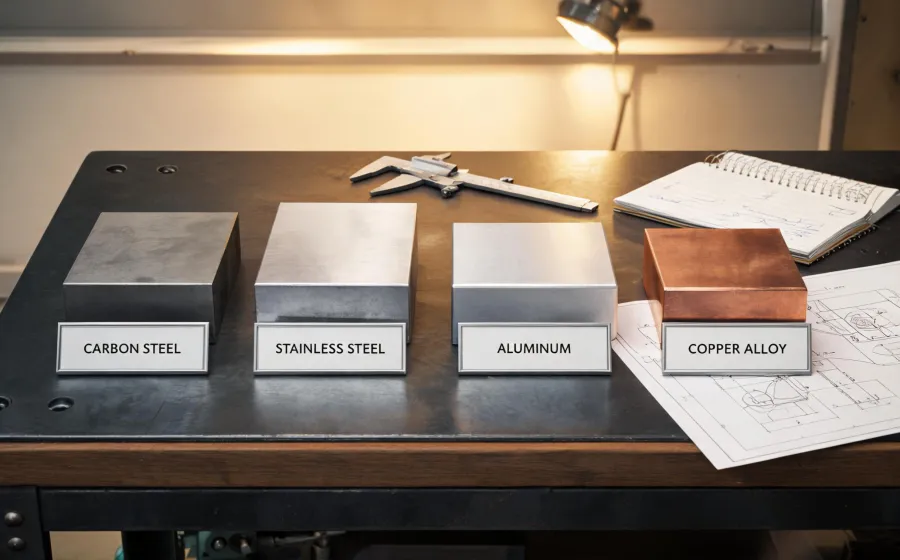
Selection demo
For a dry indoor bracket, carbon steel may be the economical starting point. For a wet or cleaning-heavy area, stainless steel often deserves consideration. For a weight-sensitive prototype, aluminum can simplify handling and machining. For bus bar, grounding or thermal transfer, copper alloys may be the right family. The final choice still depends on thickness, finish, cut size and service conditions.
Application guide cards
Carbon steel plate is often practical when the part needs strength, weldability and good availability. A buyer should still confirm thickness, hole pattern, finish and whether the plate will be painted or left as mill finish.
Stainless steel may reduce staining and corrosion in washdown or humid spaces. The guide question is whether surface appearance, cleaning chemicals or chloride exposure call for a specific stainless family.
Aluminum angle, bar and sheet help teams build quickly without excess weight. The tradeoff is lower stiffness than steel at the same dimensions, so section shape and thickness should be reviewed.
Copper and brass can support conductivity, wear and machinability needs. Buyers should define current path, heat, fastening method and finish before choosing between copper, brass or bronze stock.
Share the application, environment, dimensions and preferred pickup or delivery path. We will help turn the guide into a quoteable metal order.