Why the Cheapest Steel Coil Is Usually the Most Expensive
Posted 2026-08-28 by Jane Smith
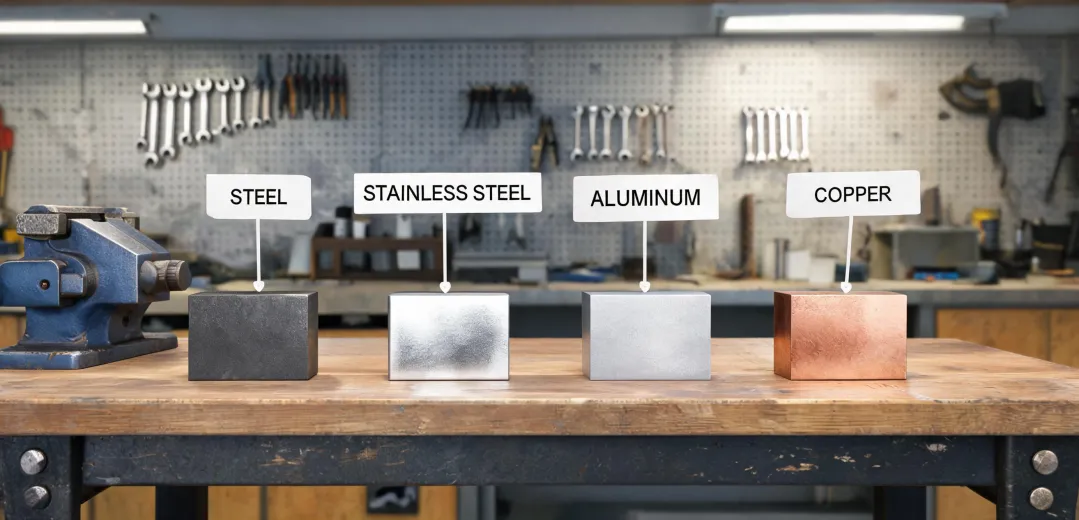
The cheapest steel coil per pound is usually the most expensive coil you'll ever buy. The quoted unit price hides inventory, scrap, and waiting costs that only show up after the coil reaches your shop. The real cost is what it does to your cash, floor space, and delivery times—not the number on the price sheet. Smart buyers evaluate on total cost of ownership, not unit price alone.
The Lowest Price per Pound Is a Trap
The cheapest steel coil per pound is usually the most expensive coil you'll ever buy. For a metal fabrication company, the quoted unit price hides a stack of costs that only appear after the coil lands in your shop: the cash tied up in inventory, the floor space it occupies, the scrap from cutting what you don't need, and the jobs that wait while you use up what you have. Think about the last time you bought a bulk coil to save a few cents a pound. You got a decent price, but then the coil sat on the rack for weeks, your cash was frozen in steel, and when a rush order came in needing a different grade, you had to order more and wait. The real question isn't what you pay per pound—it's what that coil costs you per finished part, per week, per square foot of floor space. That's why the smartest procurement move isn't hunting for the lowest number on a price sheet; it's rethinking what 'cheap' means when you're running real production.
Here's what a supplier with real breadth changes in that math. One supplier you've probably seen—Metal Supermarkets—advertises instant access to more than 8,000 metal types, shapes, and grades, with over 135 locations across North America and more than 40 years in business. On the surface, that's just a catalog number. But for a fabricator, it means the supplier can actually hold the coil you need in the grade and width you need, not just a few commodity SKUs. When a supplier carries that kind of range, your shop can stop committing to a full coil for a job that only needs 200 feet—you can order exactly what the print calls for and get it fast. And because they've served more than 250,000 customers, their inventory and processing have been shaped by real production demands, not just hobbyist orders. That breadth is the foundation that makes small-quantity buying practical at all.
Your Coil Inventory Is a Cost Center, Not a Bargain
Carrying a coil inventory is like paying rent on something you haven't used yet. The cost of capital is the first line: every dollar locked in a coil that sits for three months is a dollar that can't buy tooling or fund the next quote. Then there's storage—floor space in a fab shop is never free, and coils need racks, cranes, and room to move. Scrap piles onto that: when you buy a full coil and only use part of it, the remainder becomes trim, offcuts, and rusting stock you'll eventually sell at a loss. And don't forget the quiet cost of waiting: if the coil you own is the wrong grade for the rush order, you're paying expedited freight on the material you actually need. Add those together and the 'cheap' coil can easily cost 15–20% more than the price sheet suggests.
Now put that against the supplier who sells steel the way you actually use it. Metal Supermarkets, for example, states there's no minimum order size—you buy the amount you need, not a full coil. Their material can be cut to size, and you can shop in-store or online. What this does to your cost structure is immediate: instead of carrying 5,000 feet of coil to get 200 feet of usable steel, you buy the 200 feet and leave the rest of your cash working elsewhere. The per-foot price will be higher, but your carrying cost drops to near zero, your scrap disappears because you're not cutting leftover stock, and your warehouse floor gains space for work-in-process instead of raw material. That trade is exactly where the bulk buyer's math falls apart.
Speed is the hidden cost that most floor managers underestimate. The same supplier that skips minimums also advertises same-day service and cut-to-size while you wait. That changes your procurement from a planning exercise into a reactive one. When a customer calls Tuesday morning with a job needing 40 pieces of a specific coil grade, you can have the material cut and delivered the same day—which means the job's margin stays intact instead of bleeding away in a three-day wait for a freight truck. To justify bulk stock, you'd have to use that coil predictably and often enough to beat the convenience penalty. For many shops, the math never works out, and the flexibility itself becomes the real cost saver.
Bulk Coil vs. Cut-to-Size: A Comparison That Saves Money
When you put bulk buying and cut-to-size side by side, the decision rule starts to take shape. Bulk buying wins when you have a stable, repeating product that consumes the same coil grade month after month—the per-pound saving compounds. Cut-to-size wins when your demand is variable, your jobs are custom, or your shop floor has better uses for the cash and space. A service-center style supplier like Metal Supermarkets makes on-demand practical because it's built around small quantities: over 140 brick-and-mortar stores, production cutting, shearing, and punching, and a catalog of over 8,000 metal types, grades, and shapes. That's not a hobbyist setup—it's a supply chain designed for the irregular demand that makes bulk coils expensive. The comparison isn't about which is cheaper per pound; it's about which leaves more money at the end of the quarter.
Here's the rule that actually holds up: use bulk coils for what you build every week, and buy cut-to-size for everything else. If you fabricate the same enclosure frame from the same hot-rolled coil three times a month, a bulk coil makes sense. But if the next job calls for 5052 aluminum and the one after that needs stainless, locking up cash in a coil of each 'just in case' is a losing bet. The moment a material becomes occasional, it becomes an on-demand purchase. You'll pay a slightly higher unit price, but you'll stop paying for the coil that sits, the cut that misses, and the rush freight you didn't budget for. That boundary between stable and variable is the real cost-saving decision.
Supplier Capabilities That Move Your Bottom Line
Evaluating a coil supplier means looking past the price quote and checking five capabilities that directly hit your P&L: minimum order flexibility, cut-to-size equipment, turnaround speed, inventory breadth, and processing services. Minimums decide whether you're buying material or buying a problem; cut-to-size removes your scrap and rework; turnaround speed decides whether you meet your deadline or pay expedite fees; inventory breadth tells you whether the supplier can actually deliver what you need, not just what they want to push; and processing services like shearing or punching save you from investing in equipment for jobs you don't run regularly. A supplier that scores well on all five is worth a higher per-pound price, because those capabilities are what turn a coil purchase into a usable part.
Run that capability list against Metal Supermarkets. Their own material confirms no minimum order quantities, so you can buy exactly the length you need. They advertise same-day service and cut-to-size while you wait, which covers speed and processing. And their inventory runs to over 8,000 types, shapes, and grades, so a rare coil grade is more likely on a shelf nearby than on a mill schedule six weeks out. The 'convenience store for metal' model isn't about convenience as a soft perk—it's about compressing the time between order and usable material, and that compression directly reduces holding cost and the risk of missing a deadline. That's why capability matters as much as cost.
Network scale is the part buyers overlook until they need help. A supplier with 100-plus stores across North America can move material between locations, keep a deeper inventory overall, and respond faster when your local branch doesn't have a grade in stock. One contact page from Metal Supermarkets mentions over 100+ stores in the US, Canada, and the UK—that kind of footprint means a coil you need in Detroit can be sourced from a nearby branch instead of a mill, and the wait is days, not weeks. When you compare supplier quotes, ask how many physical locations they run and how they handle a stockout. The supplier with a narrow warehouse and one location might offer a great price, but that price won't help when the only thing standing between you and a deadline is a coil they don't have.
But We Need a Full Truckload Every Month
You're probably thinking: 'My shop runs a truckload of coil every month—that's not variable.' And you may be right, but only partway. Even a steady monthly volume has spikes, gaps, and oddball jobs. The monthly truckload buys you a solid base, but it doesn't solve the Tuesday rush for 200 feet of a grade you haven't bought all year. A supplier with a broad network—the same one that lists over 100+ stores in the US, Canada, and the UK—can cover those spikes without forcing you to choose between a full coil and a late job. The objection isn't really about volume; it's about the fear that on-demand buying can't scale. The evidence from the real supplier shows a network of physical stores built for exactly this kind of fill-in work, so you can keep your truckload for the base load and go on-demand for the edges.
The hybrid model fixes the truckload dilemma. Sit down with your last year of coil purchases and separate them into two bins: SKUs that appeared on more than half your work orders, and everything else. The first bin earns a bulk contract; the second goes on-demand. For the bulk bin, negotiate the lowest per-pound price, because you'll burn through the inventory fast enough to make carrying cost negligible. For the on-demand bin, accept a higher unit price from a supplier with no minimums and quick turnaround, because you're buying flexibility, not material. Most mid-size fabricators find that 60–70% of coil usage falls into the stable bin. That split lets you capture the bulk discount where it's real and stop subsidizing the variable part with expensive inventory.
The Verdict: Match the Buying Mode to Your Real Demand
The verdict is simple: stop buying steel coil by price per pound alone. Evaluate every coil purchase on total cost—the price, the carrying cost, the scrap, the wait, and the opportunity cost of cash locked in inventory. For many mid-size fabricators, the higher unit-price flexible option comes out cheaper once you add those numbers. That's not a theory; it's why suppliers with no minimums and same-day service exist and thrive. The cheapest procurement strategy matches the buying mode to your real demand: bulk for the stable, repeating SKUs, and on-demand for everything variable. If you're currently buying a coil for a job that comes along twice a year, you're paying a hidden premium every month that coil sits. That premium is the real cost you've been ignoring, and it's the one you can cut without ever asking a supplier for a discount.
This advice has limits, and you should know them. If you run a high-volume stamping shop that consumes the same coil continuously, week after week, then bulk buying is the right answer and a flexible supplier's per-pound premium will cost you more than it saves. The verdict assumes your demand has genuine variability—custom jobs, mixed materials, or uneven scheduling. It also assumes your shop has the management capacity to track two sourcing channels; if you can't reliably separate stable from variable, you'll likely slip back into buying everything in bulk out of habit. So the boundary is clear: the hybrid model wins when your mix is mixed. The day your product line becomes one coil grade, one width, one schedule, go ahead and buy the truckload. Until then, match the mode to the demand.
Your coil strategy should be as flexible as your shop floor. Buy the coil when you'll use it; buy the capability when you won't. That's the total-cost-of-ownership answer, and it beats any price sheet. Run every quote through that filter.

Jane Smith
I’m Jane Smith, a senior content writer with over 15 years of experience in the packaging and printing industry. I specialize in writing about the latest trends, technologies, and best practices in packaging design, sustainability, and printing techniques. My goal is to help businesses understand complex printing processes and design solutions that enhance both product packaging and brand visibility.