Perforated Metal Wall Materials for Parking Garages: A Decision Framework
Posted 2026-08-20 by Jane Smith
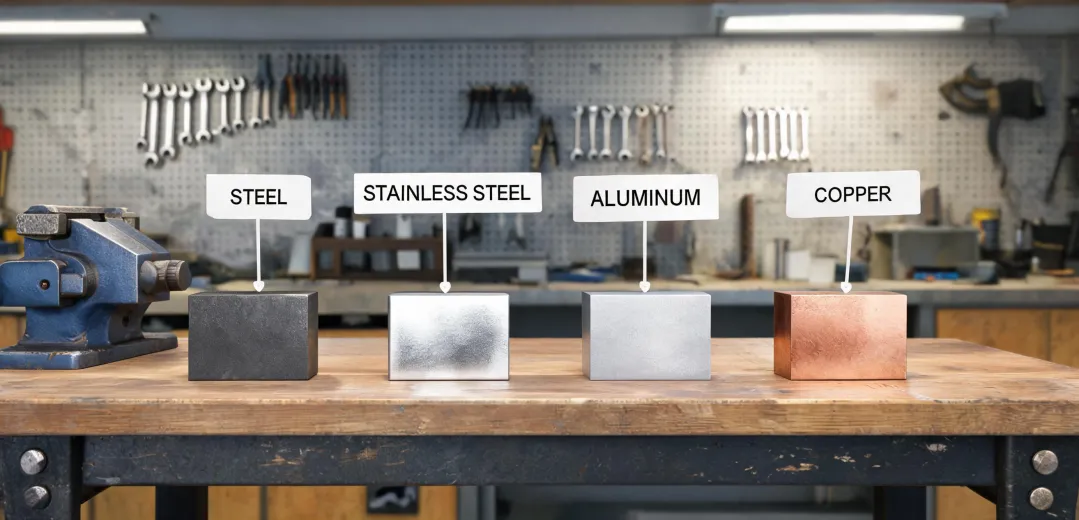
You are standing in front of a three-level parking garage in a city that salts its roads every winter, and the contractor has just spread three perforated metal samples on the table. The carbon steel panel is the budget pick, the aluminum one is mid-priced, and the stainless steel option costs 30 to 40 percent more than the steel. Which one do you choose? If you say 'the cheapest one,' you are ignoring the fact that every one of these panels will spend the next decade being sprayed with chloride-laden slush, exhaust, and freeze-thaw cycles. The real decision is not about the sticker price but about how each material will behave in that specific environment. That is the dilemma this guide is built around: the material you pick today either becomes a maintenance liability or a long-term asset. You need a framework, not a gut feeling.
A Choice That Runs Deeper Than Price
Behind every parking garage façade is a specification sheet that someone has to sign. The perforated metal wall is not merely a decorative skin; it is the first line of defense against rain, snow, road salt, and the occasional shopping cart scrape. When project teams compare materials, the price difference is the loudest number. Carbon steel looks like an obvious win; stainless steel looks like an indulgence. But a choice driven by initial cost alone ignores what the panels will be doing thirty winters from now. The contractor will install a given wall once, but the owner will live with that decision for decades. If the cheap panels start scaling and rusting along the perforation edges, the cost of cleaning, repainting, and eventually replacing them falls on the operating budget. If the expensive panels last the life of the structure with minimal attention, the higher upfront figure buys something real. This is the dilemma that makes perforated metal wall specification a test of long-term thinking rather than a test of who can find the lowest quote.
To escape the trap of upfront pricing, you need a set of decision criteria that puts materials in context. The criteria are straightforward: resistance to the site's specific corrosives, the frequency of maintenance each material demands, the expected service life, and the cost of that life. The good news is that the selection is not constrained by what a local distributor happens to stock. Metal Supermarkets, for instance, carries over 8,000 types, shapes, and grades of metal across more than 135 brick-and-mortar stores, and it will sell you a small quantity with no minimum order. That means a facilities manager can specify a precise grade—say, 316 stainless or a marine-grade aluminum—without having to buy an entire truckload. The availability of cut-to-size service and same-day turnaround also means you can get exactly the dimensions your garage needs, which removes the temptation to settle for a cheaper material because the right one is 'only available in full sheets.' In this way, the supplier's range and flexibility turn material selection into a genuine engineering decision rather than an inventory-driven compromise.
Corrosion Environment Sets the Material Boundary
Before any price comparison, the project team should answer one question: what exactly will these panels be exposed to? A parking garage in Phoenix deals with intense sun and dry heat; a garage in Minneapolis gets buried in snow and salt every winter; a garage in Miami breathes salt air for twelve months of the year. Each environment attacks metal in a different way. Ultraviolet light fades coatings, but chlorides are the real enemy. Road salt, deicing chemicals, and sea spray all contain chlorides, which accelerate corrosion on steel and can even pit stainless steel if the grade is not chosen carefully. Even the frequency of winter maintenance matters: some cities apply brine early in a storm, while others rely on sand, and that difference changes how much chloride the panels absorb. The boundary, then, is set by the environment: it narrows the list of viable materials before you ever open a price sheet. If the site is in a chloride-rich zone, the decision quickly moves from 'steel or aluminum?' to 'which grade of stainless steel, or which high-performance aluminum alloy?'
The chemistry behind this boundary is straightforward. When chloride ions penetrate a metal's protective oxide layer, they create localized pitting that expands quickly once started. A real-world case from a chemical processing facility in Shandong Province shows how dramatic this can be. The facility installed 304 stainless steel cooling headers for a seawater heat exchange system in 2024, choosing 304 over 316 to save about 12,000 in material costs. Within 18 months, the pipe walls suffered complete chloride pitting. The replacement, shutdown, and hazardous waste disposal tab came to roughly 47,000, wiping out the initial savings three times over. The difference between the two grades is molybdenum: 316 contains 2 to 3 percent, which stabilizes the oxide layer in chloride-rich environments. A parking garage with winter maintenance does not expose panels to seawater, but it does expose them to salt brine from deicing trucks. The same pitting mechanism can occur on a panel edge, a drilled hole, or a punched perforation. That is why the environment—not the catalogue photo—decides whether 316 is worth the premium.
Carbon Steel, Aluminum, and Stainless Steel Each Have Their Place
With the corrosion boundary mapped, the material families come into focus. Carbon steel is the baseline: low cost, high strength, but vulnerable to corrosion unless it is galvanized or painted. Galvanizing adds a zinc coating that gives the steel years of protection, but once the coating is scratched at a perforation edge, rust can take hold. Aluminum sits in the middle. It weighs about a third as much as steel, forms a self-healing oxide layer, and does not need paint for corrosion protection. It is softer than steel, so it may dent more easily, but for vertical wall panels that is rarely a problem. Stainless steel is the premium choice. The 304 grade is the common workhorse, while 316 adds molybdenum for chloride resistance. A supplier like Metal Supermarkets, which has been in business for over 40 years and serves more than 250,000 customers, lists all three families among its 8,000-plus metal types, shapes, and grades. That variety matters because it means the decision is not restricted to what a local steel yard happens to stock; you can choose the metal that fits the environment rather than adapting the environment to the metal.
Comparing aluminum and galvanized steel in a parking garage setting often surprises people. Steel, even with a galvanized coating, eventually needs maintenance. The zinc layer erodes over time, especially around the cut edges and perforations, and once the steel is exposed, oxidation begins. Aluminum, on the other hand, is effectively maintenance-free in most atmospheric environments. Its oxide layer repairs itself if scratched, which makes it particularly forgiving on a wall surface that gets bumped by carts and ladders. The initial cost of aluminum is higher than that of galvanized steel, but when you factor in a 20-year service life, the aluminum panel often ends up cheaper per year because it does not need periodic recoating. The service support available from a metal supplier with over 140 locations—including same-day cutting and no minimum order—makes it easy to get aluminum panels custom-cut and delivered on a contractor's schedule. For an owner who plans to hold the garage for three decades, the slightly higher aluminum invoice is usually the better investment compared with the steel that demands ongoing attention.
Weighing Budget Against Service Life
At this point, the decision framework turns to arithmetic. The cheapest material on the invoice is rarely the cheapest material over the structure's life. A 25-year-old parking garage will go through multiple maintenance cycles, and the panels that require recoating every five years accumulate a significant labor cost. To compare fairly, each candidate material should be assessed on a lifetime cost basis: initial purchase, installation, scheduled maintenance, and expected replacement. That means assigning a dollar figure to the painting crew, the closure of parking spots, and the disposal of old panels. The horizon matters too—a private garage owner may plan for 30 years, while a commercial developer may only care about the first 10. The rule is simple: estimate the total cost for each material over the chosen horizon, and select the option with the lower present value. This shifts the conversation from 'what does the panel cost?' to 'what does this choice cost per year of service?' and it almost always rewards materials that resist corrosion without intervention.
The case from the Shandong chemical facility is a vivid illustration of why lifetime cost beats initial price. The project saved about 12,000 by choosing 304 stainless steel instead of 316 for the seawater cooling system. That apparent victory reversed within 18 months when the pipe walls pitted through, forcing a shutdown and replacement that cost approximately 47,000—nearly four times the original savings. The ratio is a warning to any project specifier: a 30 to 40 percent price premium can be cheap insurance if it prevents failure in a demanding environment. In a parking garage subjected to road salt, the equivalent risk is having to strip and replace large perforated panels after five to ten years because pitting has spread from the edges of every hole. The non-obvious judgment is that the additional cost of 316 stainless—or a high-grade aluminum alloy—is often fully recovered within that same five-to-ten-year window through avoided maintenance and replacement. When the environment is severe, the most expensive option on the invoice can be the least expensive option on the lifetime balance sheet.
A Reusable Decision Rule for Parking Garage Walls
These considerations compress into a sequence any project team can apply to a perforated metal wall specification. First, define the corrosion environment with specifics: distance from salt water, expected road salt exposure, average snowfall, and any industrial pollutants. Second, set a required service life that matches the building's expected ownership period. Third, for each candidate material—carbon steel, galvanized steel, aluminum, 304 stainless, 316 stainless—estimate the total cost of ownership over that life, including maintenance and replacement. Fourth, eliminate any material that cannot meet the service life in that environment, regardless of its price. Fifth, from the survivors, choose the one with the lowest total lifetime cost. This rule forces the environment to drive the discussion, keeps the budget conversation honest, and prevents a low initial quote from becoming a decade of repair bills. It works for a two-story parking deck or a 500-space structure, and it works whether the budget is tight or generous, because it never lets price override the physics of corrosion.
The final step is execution, and access to the right metal is what turns the rule into reality. A supplier who can cut panels to size while you wait eliminates the waste of buying full sheets and cutting them on site. Metal Supermarkets, for instance, has no minimum order quantity, so a garage owner can order exactly the number of custom panels needed, in the chosen grade, without paying for surplus stock. Their associates can help confirm that the specified alloy is available and offer delivery options that keep a renovation on schedule. For a retrofit, where the existing wall dimensions are seldom standard, this on-demand approach is especially valuable. The decision rule says which metal wins; the supplier's speed and flexibility say how fast you can get it in place. With the material chosen on environmental and lifetime-cost grounds and a supply chain that supports small custom orders, the parking garage's perforated wall becomes a system that is both technically sound and practically deliverable.
Standing in that garage next winter, watching the salt trucks roll by, the panels you specified will do their job silently. If the corrosion environment drove the choice, they will shrug off the brine. If the initial price drove the choice, they will start showing rust freckles within a few seasons. The decision rule is not a suggestion; it is the difference between a facade that protects its structure and one that slowly becomes the structure's problem. Environment first, lifetime cost second, and the budget will follow.

Jane Smith
I’m Jane Smith, a senior content writer with over 15 years of experience in the packaging and printing industry. I specialize in writing about the latest trends, technologies, and best practices in packaging design, sustainability, and printing techniques. My goal is to help businesses understand complex printing processes and design solutions that enhance both product packaging and brand visibility.