Perforated Metal Wall for Parking Garages: How to Choose the Right Material
Posted 2026-08-19 by Jane Smith
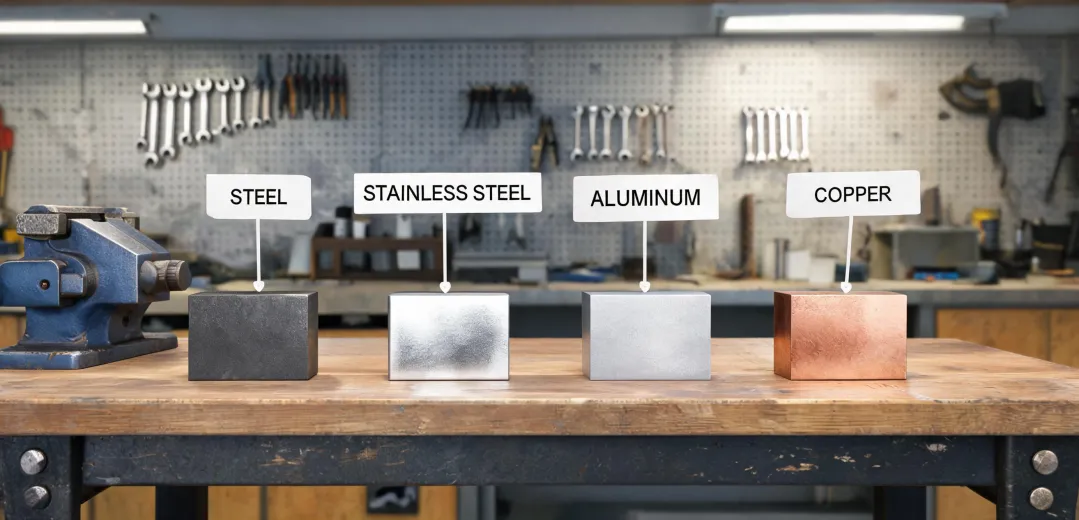
Choosing a metal panel for a parking garage always starts with a clash between the price list and the worry list. Carbon steel looks great on paper, but will it survive the salted parking deck? Stainless steel seems safe, but does your budget justify the jump? Every project manager faces this tension, and the right answer is never the one printed on the quote sheet — it is a trade-off that depends on where you build and how long you plan to maintain.
Material Choice: Carbon Steel, Galvanized Steel, or Stainless Steel?
Imagine yourself in the purchasing office, staring at a quote sheet that lists carbon steel, galvanized steel, aluminum, 304 stainless steel, and 316 stainless steel, each with a different per-square-foot price. Your project budget, after the concrete and lighting contracts, leaves you just enough for the cheapest option on that list. But you remember a case from the coast: the stainless steel panels on a similar garage held their surface for a decade, while the painted carbon steel began to bleed rust in its third year. Now you are caught between the fear of early failure and the pressure to stay under budget. This is the moment when a simple 'choose stainless steel' would be a lazy answer, because the real choice depends on conditions you have not yet measured.
To understand why there is no universal answer, look at how a major metal supplier thinks about selection. Metal Supermarkets, which stocks more than 8,000 metal types, shapes, and grades and serves more than 250,000 customers, emphasizes that the right metal depends on the application. A galvanized panel that performs well in a dry inland garage may corrode quickly near the coast, where salt-laden air attacks the zinc coating. In northern climates, the de-icing salts carried into the structure by vehicles create an equally aggressive environment. The corrosion condition of your specific site, not marketing promises or general reputation, should drive the material choice. That is why the same supplier can legitimately sell carbon steel to one client and stainless steel to another: both are correct for their contexts.
Three Questions First: Environment, Maintenance, Budget
To break the deadlock, run the decision through three filters. First, where is the garage located? If it is within a few kilometers of the ocean, chloride particles will settle on every surface. If it is in a snow-belt region, road salt will be tracked in and concentrate near entry ramps. If it is an enclosed underground structure, condensation plus vehicle exhaust creates a different, often milder, corrosion profile. Second, what will the maintenance schedule look like? A facility that can repaint or recoat panels every five years can get away with coated carbon steel; a team that expects zero maintenance for decades should move to a higher alloy or stainless steel. Third, what is the true budget? Look beyond the per-square-foot quote and include expected coating intervals, expected service life, and replacement cost. These three answers will eliminate at least half of the material options before you even compare prices.
Supply flexibility also reshapes the decision. When a metal supplier has no minimum order quantity and can cut any size to order, you are not forced to buy a standard full length that may exceed your design dimensions. Metal Supermarkets, with more than 135 stores in North America and the UK, offers same-day service and small-quantity orders; their representatives will help you select the right grade and then cut precisely to your panel layout, so you can order exactly the footage you need and avoid waste. This ability to source small, custom-sized pieces means the cost difference between materials can be managed more tightly. You can even mix grades in one project—using a more expensive alloy where corrosion risk is highest and a budget-friendly option where it is not. The supplier's role becomes a partner in optimizing the design, not just a vendor selling stock lengths.
Head-to-Head: Carbon Steel, Galvanized Steel, Aluminum, Stainless Steel
Now let's compare the four candidates head-to-head. Carbon steel is the lowest-cost option; it is strong and easy to weld, but bare it will rust readily, so it depends on a paint or powder-coat system. Galvanized steel adds a zinc layer that sacrifices itself to protect the base, making it acceptable for medium-corrosion settings, though scratches and cut edges remain vulnerable. Aluminum offers natural oxide protection, weighs about a third as much as steel, and resists corrosion well in many atmospheres, but it is softer and can tear around perforations if not handled carefully. Stainless steel is the premium choice, yet it is not a single metal. A DAPU metal comparison shows that 304 stainless resists atmospheric and mild chemical exposure, while 316 incorporates 2% to 3% molybdenum, which specifically improves chloride resistance. That small addition raises the price by 30% to 40%, and it makes a decisive difference in salt-laden environments.
Why does the 304/316 gap matter so much? Because in a chloride-rich environment, 304 can fail long before you expect. A documented case from a Shandong chemical plant illustrates the risk. In 2024, the facility installed 304 stainless cooling headers for a seawater heat exchange system, choosing 304 to save roughly $12,000 on material costs compared with 316. Within 18 months, the pipe walls suffered complete chloride pitting, forcing a shutdown. The final bill, including lost production, replacement parts, and hazardous waste handling, reached about $47,000—more than three times the initial saving. The lesson for a parking garage is direct: if your site gets marine spray, de-icing salt, or industrial chloride fallout, choosing 304 to save money is a false economy. The 30% to 40% premium for 316 buys real service life, and it is the correct call for coastal or salt-treated garages.
Custom fabrication is another reason the material choice can be optimized rather than dictated by stock limitations. Metal Supermarkets maintains inventory that includes perforated plate in mild steel, aluminum, and stainless steel, and it offers production cutting, shearing, and punching services. With over 135 locations and 40 years of experience, the company can source unusual alloys and cut any shape to size. For a parking garage project, this means you are not limited to a standard sheet size; you can specify the exact panel dimensions and hole pattern needed for your ventilation and facade design. The practical impact is that choosing a material like 316 does not lock you into expensive waste—you buy only what the drawings require, and the supplier handles the cutting. That flexibility makes high-performance materials more affordable than they first appear.
Parking Garage Specifics: Ventilation, Safety, and Construction
Perforated metal walls in parking garages do more than separate cars from the surrounding structure; they manage airflow, daylight, and vehicle impact. The first thing to define is the perforation pattern. Open area ratios commonly range from 15% to 30% to support natural ventilation, depending on the garage's height and whether fans are present. A higher open area improves air movement but weakens the sheet, so panels near vehicle paths may need thicker metal or a smaller hole diameter. The panel must also meet fire-safety expectations: while metal itself is noncombustible, some painted coatings release smoke at high temperatures, which can affect smoke evacuation design. Coordinating with mechanical and fire engineers early will tell you whether a 1.5 mm panel with 18% open area is adequate, or whether you need a 2 mm panel with a more conservative hole layout.
Installation and maintenance also come into play. Aluminum's lightness makes it easy to lift into position, especially on upper floors, but its lower hardness means perforated edges can deform during handling. Stainless steel is harder and resists dents, but its higher density requires stronger anchors and may increase structural loading. Coated carbon steel is the heaviest to transport in terms of protective care—scratches that expose base metal become future rust spots unless they are touched up promptly. Additionally, the choice of fasteners matters more than many realize: mixing a corrosion-resistant panel with carbon steel screws can create galvanic corrosion at the contact points. A complete specification must include compatible fasteners, sealants, and edge treatments, or the best material will fail at its weakest joint.
Thanks to small-batch supply chains, you can now split the material choice by zone within the same garage. Metal Supermarkets explicitly promotes no minimum order quantities and any-size cutting, which makes it practical to order 316 panels for the exposed perimeter and galvanized panels for interior bays. Their case materials show a broad range of grades, from alloy steel to tool steel, and they can source rare requests; this means a project is not forced to standardize on one sheet metal. Instead, you can apply the corrosion map to your floor plan: each area gets the cheapest material that meets its local risk. This zone-based approach can cut overall material cost by 15% to 25% compared with using the same premium material everywhere, while still protecting the vulnerable sections.
The Final Decision Rule for Specifiers
Time to turn all this into a rule. Start by mapping the chloride exposure of the site. If the garage is within about 10 kilometers of the coast, or on a route where de-icing salt is used for more than a few days a year, tag it as high exposure. In that zone, bypass 304 and go straight to 316 stainless steel. That chemical plant case demonstrates the hidden cost of 304 in saltwater-like conditions: the $12,000 saving on material became a $47,000 failure within 18 months. For high-exposure parking garages, the 30% to 40% premium for 316 is effectively an insurance premium, and it is much cheaper than an early replacement. If the site is low exposure—dry inland, enclosed, away from salt use—carbon steel with a durable coating or galvanized steel will serve well. Spend the savings on thicker sheet or a higher-quality perforation rim to improve impact resistance and edge durability.
The rule can be written in one line: let the environment set the minimum grade, then let the budget choose thickness. When you are unsure, consult a metal supplier that specializes in small quantities and custom cuts. Metal Supermarkets, with more than 100 locations across the US, Canada, and the UK, is an example of a supplier whose team will listen to your service-life expectations and recommend a specific alloy. They can provide fast quotes and cut-to-size service, so you don't need to buy a full bundle of a material you might not use. The decision-making burden does not have to be yours alone; a capable distributor becomes the bridge between your architectural intent and the right metal. Keep the rule close, use the environment as your first filter, and you will avoid the two most common mistakes—overpaying for stainless steel in a dry garage, or under-specifying it in a coastal one.
Pour the decision rule into a single sentence: for a parking garage perforated metal wall, map the corrosion zone first, then match the material grade—316 for chloride exposure, coated steel or galvanized where the air is dry. That is the rule that turns a confusing quote sheet into a clear specification.

Jane Smith
I’m Jane Smith, a senior content writer with over 15 years of experience in the packaging and printing industry. I specialize in writing about the latest trends, technologies, and best practices in packaging design, sustainability, and printing techniques. My goal is to help businesses understand complex printing processes and design solutions that enhance both product packaging and brand visibility.