Perforated Metal Sheet in Salt Lake City: How Spec-Driven Local Supply Works
Posted 2026-09-02 by Jane Smith
-
From Stock Lists to Spec Sheets: The Perforated Metal Shift
-
The Three Specs That Define Perforated Sheet
-
Steel, Aluminum, or Stainless: The Material Trade-Off
-
Forty Years of Network Growth Behind Local Supply
-
Buying Perforated Sheet in Salt Lake City Today
-
Engineer's Rules for Open Area, Inventory, and Delivery
-
Back to the Beginning: The Choice That Remains
Forty years ago, buying perforated metal sheet in Salt Lake City meant working from a distributor's stock list. You chose from standard sizes, a few alloys, and whatever hole patterns were in the warehouse; cutting to size was a separate job. Today, an engineer can open an online quoting tool, enter a specific alloy like 5052 aluminum at 1.5 mm, pick a 40 percent open area, and have the pieces cut to size at a local store. For engineers, procurement has moved from generic inventory to spec-driven local supply: Metal Supermarkets' network of 135+ stores, online quoting, and cut-to-size service close the gap between standard compliance and fast delivery.
From Stock Lists to Spec Sheets: The Perforated Metal Shift
Picture a mechanical engineer in Salt Lake City designing a ventilation guard for a commercial building. A decade ago, she would have called a metal distributor, asked what perforated sheet they had in stock, and settled for a standard panel size with a hole pattern that was 'close enough.' The guard might have required extra framing to accommodate the over-sized sheet, and any deviation from stock meant a separate fabrication step. The spec sheet on her desk now is different: alloy 5052 aluminum, 1.5 mm thickness, 40 percent open area, and a panel size that matches her drawing exactly. That detail-level control is not a luxury — it is the new baseline for how perforated metal is bought and sold.
What made that shift possible? The supplier network itself. Metal Supermarkets has spent four decades building a chain of more than 140 stores across the US, Canada, and the UK, stocking more than 8,000 types, grades, and shapes of metal. Its service promise includes same-day turnaround. For a purchasing engineer, that means a spec like 5052 aluminum with an open area of 40 percent is no longer a special order. It is a routine request that a local store can fill without waiting for a mill run. The inventory depth is why the spec sheet, not the stock list, now drives the purchase. And that depth exists even in a smaller market like Salt Lake City.
The Three Specs That Define Perforated Sheet
Three specifications drive every perforated metal decision: material, thickness, and hole pattern. Material determines corrosion resistance, strength, and cost; thickness affects rigidity and weight — too thin can flutter, too thick adds expense. Hole pattern sets open area, which controls airflow and shielding. For a ventilation guard, the pattern must allow air through while stopping debris; for an architectural screen, it might be chosen for light. Open area also interacts with thickness: a 40 percent pattern removes nearly half the sheet's cross-section, so a thinner sheet may flex. Getting these three right is the difference between a panel that performs and one that has to be re-engineered. The spec sheet, not the stock list, is now the starting point.
For example, the aluminum alloys commonly used for perforated sheet include 1050, 1060, 1350, 1070, 3003, 5052, and 6061. The supplier's aluminum guide groups sheet as thin-gauge aluminum from 0.2 mm to 6.0 mm, while plate starts at 6.0 mm. The 1.5 mm thickness in the ventilation guard example falls in sheet range, with 5052 offering a balance of corrosion resistance and formability. But each alloy has its own mechanical properties: 3003 is easier to form, while 5052 is stronger. When you specify perforated aluminum, you're trading off these characteristics, not just picking a number.
Not every project calls for aluminum. Alloy steel, as defined in the supplier's material guide, contains significant quantities of alloying elements — beyond carbon and the usual amounts of manganese, silicon, sulfur, and phosphorus — added to change properties. That definition separates true alloy steels from plain carbon steel. In perforated applications, alloy steel is chosen when the panel needs to handle heavy loads, high impact, or elevated temperatures. For example, a machine enclosure in a foundry would demand alloy steel, while an outdoor ventilation guard in Salt Lake City's dry climate might be fine in aluminum. The material matrix is the first filter in your decision.
Steel, Aluminum, or Stainless: The Material Trade-Off
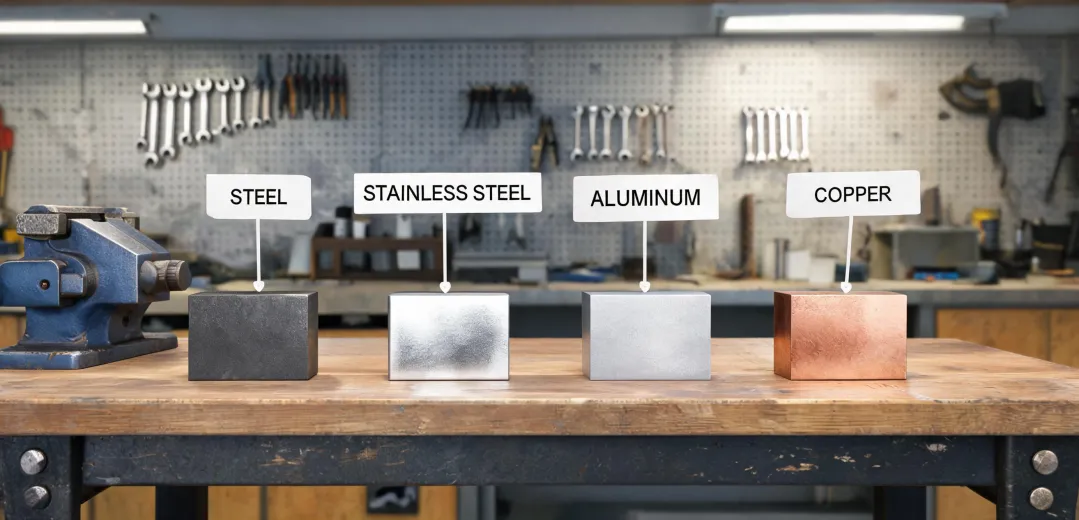
The material matrix for perforated sheet comes down to three families: steel, aluminum, and stainless steel. Aluminum, as the supplier's guide notes, is light, formable, and easy to process — making it the default for architectural screens and HVAC guards. Steel is heavier and stronger, but corrodes unless protected. Stainless steel offers the best corrosion resistance, but costs more and can be harder to cut. The engineer's first job is to define the service environment: what temperatures, humidity, chemicals, or loads? For an indoor ventilation guard in Salt Lake City, aluminum is often the practical pick; for a parking garage screen exposed to road salt, stainless may justify its premium.
A simple decision rule: if corrosion resistance is the main driver and weight matters, choose aluminum; if you need maximum strength per dollar and can protect the surface, choose steel; if the environment is aggressive, choose stainless. But the alloy within the family also matters — within aluminum, choose between 3003 and 5052 based on forming needs. Write the material spec first, then filter the supplier's inventory. That sequence keeps you from being talked into a 'standard' grade that isn't right.
Forty Years of Network Growth Behind Local Supply
To understand why local supply feels different now, look at how the network evolved. Forty years ago, a metal distributor might serve a single city, stocking a few hundred items. Perforated sheet was not a core product — most shops carried common sizes only, and anything unusual meant calling a mill or a larger distributor. The engineer needing a specific hole pattern could wait days or weeks, and that wait was baked into the project schedule. That was the world of 'get what's in stock' — exactly what the modern supplier network replaced.
The growth of dedicated small-quantity suppliers changed that. Metal Supermarkets, for instance, calls itself the world's largest distributor of small-quantity metals, with over 100 stores across the US, Canada, and the UK. That footprint is not just marketing — it's logistics. Each store carries a wide range, and a chain can stock enough variety so a single store in a medium-sized city like Salt Lake City can support a local engineer without waiting for a central warehouse. The growth marker isn't the store count alone; it's density that makes 'same-day' a realistic promise. When a supplier is in your metro area, inventory is minutes away, not days. You can ask for a custom cut on Tuesday and have it Wednesday.
Today the network has consolidated. Metal Supermarkets reports over 140 physical locations across North America and the UK, with a catalog of more than 8,000 types, grades, and shapes. The promise: same-day service and fast turnaround. For a purchasing engineer, the local store is no longer a warehouse with a fixed shelf — it's a service center that can draw on deep inventory and support value-added steps like cutting, shearing, and punching. The scale has turned a perforated sheet order from a supply-and-demand problem into a spec-confirmation problem: stock is nearby, so the task is to specify correctly and choose pickup or delivery.
Buying Perforated Sheet in Salt Lake City Today
Buying perforated sheet in Salt Lake City today follows a straightforward path. Start by calling or requesting a quote from a local Metal Supermarkets store — a single call or online request gives instant access to over 8,000 types, shapes, and grades of metal. Next, visit the store to see the stock; many engineers do, because it confirms gauge and pattern. Then give the counter staff your cut list: how many pieces, what lengths, what dimensions. The key detail is the no-minimum-order policy: you can buy exactly what you need, no need to order a full sheet and waste the remainder. That policy makes custom specs practical for small projects.
The service layer turns that path into a mini-fabrication trip. With over 135 locations across North America, the company promises wide inventory, light processing, and quick turnarounds — and counts over 250,000 customers who rely on that speed. For a small order, the store effectively acts as a local fabrication shop: it can shear, punch, or cut your sheet to size while you wait. Online ordering covers the times you don't need to see the metal, but the in-store visit is where you can hand over a drawing and walk out with finished parts the same day. That combination of online convenience and local processing is the product of four decades of network evolution.
Engineer's Rules for Open Area, Inventory, and Delivery
Rule one: verify open area against structural requirements. The aluminum guide gives thickness ranges — sheet from 0.2 mm to 6.0 mm, plate above — but open area also affects how much material remains to carry load. A 40 percent open pattern removes nearly half the sheet's cross-section, so a thinner sheet may flex or tear under vibration. Include both open area and minimum thickness in the spec. The supplier's claim of 8,000 types is a reminder that the exact combination is likely in stock — ask for it. Local inventory depth is what lets you stay true to the spec instead of accepting a substitute.
The next rule concerns the delivery window: make it part of the spec. When you call a supplier, ask two questions: 'Is this exact alloy and pattern in stock locally?' and 'What is the cut-to-size turnaround?' If the answers are 'yes' and 'today,' you've removed the conflict between speed and exactness. If the material must come from a sister store, you'll know the trade-off immediately. In the ventilation guard scenario, confirming 5052 aluminum at 1.5 mm before submitting the purchase order avoids a schedule hostage to a backorder. The fastest order is the one that matches the spec on the first try.
Back to the Beginning: The Choice That Remains
Forty years ago, the choice was between what the distributor had and what you could wait for. Today, the choice is between fast delivery and exact spec — but they no longer have to conflict. A supplier network with 135-plus stores, online quoting, and cut-to-size service lets an engineer in Salt Lake City specify a 40% open area in 5052 aluminum without treating it as a special order. The shift from stock-list procurement to spec-driven buying is real. The limiting factor is no longer inventory distance but how clearly you can define the spec. When you can get a custom-cut panel the same day, the residual question is not 'can they supply it' but 'did I specify it correctly.'
That openness is worth holding onto as standards evolve. Perforated sheet specs will keep moving toward tighter tolerances, more alloy choices, and faster turnaround. The engineer's reusable rule comes back to the beginning: treat every purchase as a spec-confirmation exercise, not a search. Write down the material, thickness, and open area before you call or quote, then let local networks show how quickly they can deliver. When the standards change again — and they will — you'll be ready to ask the right questions from the start.
And that, in the end, is what forty years of network building made possible: a purchase that starts with the spec you write, not the inventory someone else happens to keep.

Jane Smith
I’m Jane Smith, a senior content writer with over 15 years of experience in the packaging and printing industry. I specialize in writing about the latest trends, technologies, and best practices in packaging design, sustainability, and printing techniques. My goal is to help businesses understand complex printing processes and design solutions that enhance both product packaging and brand visibility.