Perforated Metal in Salt Lake City: A Fabricator's Guide to Sourcing and Grade Selection
Posted 2026-08-17 by Jane Smith
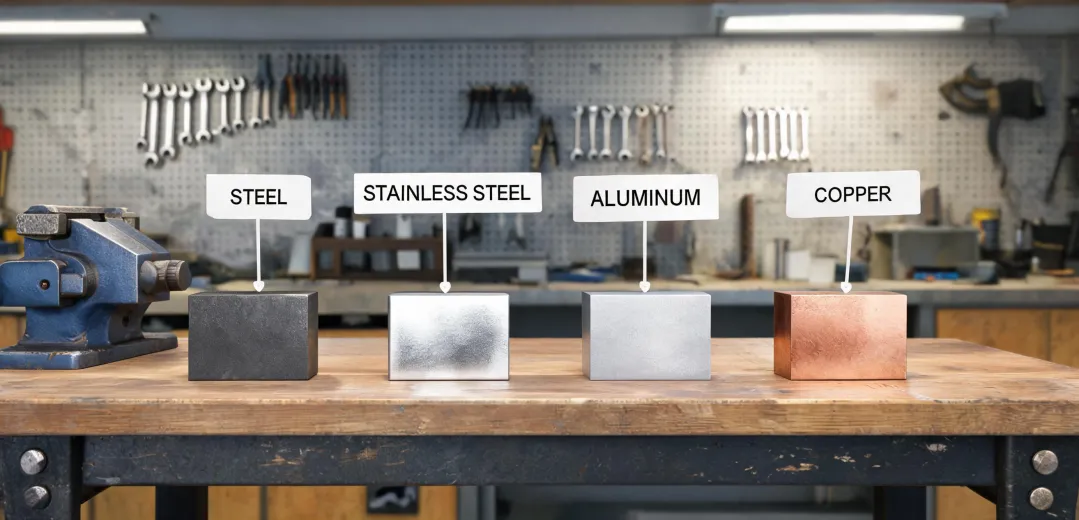
Metal Supermarkets, the world’s largest supplier of small-quantity metals, carries perforated sheet in mild steel, aluminum, and stainless, with over 8,000 types, shapes, and grades. With more than 135 stores across North America and a 40-year track record serving over 250,000 customers, it offers cut-to-size pieces with no minimum order. The key is to specify correctly: match the grade to the environment, so you don’t overpay or under-spec the grade.
A Perforated Screen, a Tight Deadline
A Monday morning rush order for a perforated metal screen doesn’t have to become a sourcing nightmare. Picture this: you’re in your Salt Lake City shop, and a commercial client needs a screen delivered by Friday. You have the pattern, you have the mounting hardware, but you don’t have the material, and the old habit of ordering a full 4x8 sheet from a distant mill feels like the only option. That panic is avoidable, because the same supplier that stocks pipe, bar, and sheet in small quantities also carries perforated metal, and it has locations that can get the piece to your shop in days, not weeks. Metal Supermarkets, the world’s largest supplier of small-quantity metals, gives you instant access to over 8,000 types, shapes, and grades, including perforated sheet in mild steel, aluminum, and stainless. With more than 135 stores across North America and a 40-year track record serving over 250,000 customers, this is not a specialty catalog order; it’s a local stop. The real question is not whether you can find perforated metal in Salt Lake City, but how to specify it correctly so you don’t overpay or under-spec the grade.
The fastest way out of that stress is a phone call or a short drive to a Metal Supermarkets store. So where do you start? The process is simpler than the mental image of a factory floor. You call or walk in, and a staff member walks you through the options: hole size, pattern, material, thickness, and exact dimensions. They can quote you on the spot, and if you’re in a hurry, the same-day cutting service means your pieces are ready while you wait. The company itself is easy to reach — with over 100 stores across the US, Canada, and the UK, and contact channels that include phone, online forms, and in-person visits, you’re never far from a human who can answer a question like 'does this come in 316?' The convenience is the point: this is a supplier built for small orders, and their whole model is based on selling you exactly what you need, not a truckload.
Perforated Metal 101: What You’re Actually Ordering
Perforated metal is a standard stock product in three core materials. Simply put, it’s sheet metal with a regular pattern of holes punched through it, and it comes in a wider material menu than many buyers expect. You can get it in mild steel, which is the economical choice for indoor partitions or machine guards that don’t face moisture. Aluminum is lighter and naturally corrosion-resistant, making it a go-to for architectural panels where weight matters. And stainless steel — usually 304 or 316 — brings the strength and clean look that commercial facades demand. The important detail is that these are not exotic special orders; Metal Supermarkets lists perforated as a standard product category in mild steel, aluminum, and stainless, alongside expanded metal and bar grating. So when a project calls for a screen that’s both decorative and functional, you’re choosing from a stocked menu, not commissioning a custom fabrication. That means the lead time stays short, and the price stays predictable.
The application decides which material belongs on your panel. Think about what the perforated panel actually does. On a facade, it can shade glass while letting air move; on a machine, it guards moving parts while letting heat escape; on a railing infill, it gives privacy without blocking the view. The material choice follows the environment, not the look. For a dry interior wall, mild steel with a painted finish is fine and cheap. For a screen that will face rain, snow, or the corrosive breath of the Great Salt Lake, you want something that won’t pit and streak. That’s where the stainless grades start to matter, and it’s also where many buyers make the mistake of treating 'stainless' as one identical material. It isn’t, and the difference can cost you a second job if you ignore it.
Cut-to-Size and No-Minimum: Why Small Orders Work
The biggest operational win is the no-minimum, cut-to-size policy, which removes the minimum-order penalty that haunts small projects. Industry convention says you buy a full sheet, cut out your part, and eat the scrap — but that’s a rule for mills, not for a local supplier. Here you can order one piece, cut to size, with no minimum order quantity. The phrase 'no minimum' isn’t marketing fluff; it’s a policy that lets you buy exactly the square footage your drawing calls for, whether that’s a single 12-inch strip or a half-dozen 3-foot panels. And because the cutting is done in-store, you walk out with finished pieces, not a raw sheet and a trip to your shop’s shear. That same-day turnaround matters when the install date is already on the calendar. You can even call ahead for a quote, so the price is locked before you commit time to the trip.
To use that convenience well, bring a spec sheet and an open mind. Before you visit, write down the exact dimensions, hole size, and material you think you need — but be ready to adjust. The metal specialists at Metal Supermarkets can steer you from 304 to 316 when they hear the words 'salt exposure,' or suggest a lighter gauge if rigidity isn’t critical. They also offer value-added services like shearing and punching, so even if your part needs a simple secondary operation, they can handle it while you wait. If you’re not sure which store covers your side of the valley, the find-a-store tool on their site points you to the nearest location, and a quick quote request online gets a response from a representative who can confirm stock and price before you drive over.
When 304 Isn’t Enough: A Salt Lake Lesson
Grade selection is where you can save money and still lose the job. The real fork in the road is the grade of stainless, and this is where the cost-saving instinct can backfire. The standard rule of thumb is that 304 stainless handles atmospheric corrosion and low-level chemical exposure just fine, while 316 adds a key ingredient — molybdenum, at 2 to 3 percent — that makes it significantly more resistant to chlorides. Those chlorides are exactly what you get near the Great Salt Lake, where lake-effect dust carries salt, or on roads where de-icing salt is thrown all winter. The price premium for 316 over 304 runs 30 to 40 percent, which can feel like an easy cost to cut when you’re quoting a job. But that premium buys a measurable shift in corrosion resistance, and in a chloride-rich environment, the cheaper grade can fail in a way that no coating will fix. The choice is not about aesthetics; it’s about whether the panel will still be standing when the warranty ends.
A 2024 failure in Shandong shows what chloride corrosion really costs. Consider what happened at a chemical processing facility in Shandong Province in 2024. The procurement team installed 304 stainless steel cooling headers for a seawater heat exchange system, saving roughly $12,000 on material costs compared to 316. Within less than 18 months, the pipe walls suffered complete chloride pitting — not cosmetic staining, but through-wall failure that forced a shutdown. The final bill for the whole incident, including lost production, replacement materials, and hazardous waste disposal, came to approximately $47,000. That’s nearly four times the initial savings, and it doesn’t count the project delays or the reputational hit. The lesson is not that 304 is bad; it’s that 304 was the wrong answer for that specific environment. For a Salt Lake City application, the same logic applies: if your perforated screen faces brine, industrial salts, or decades of winter road mist, that upcharge for 316 is an insurance policy with an excellent payout ratio.
The protective mechanism behind 316 is simple and decisive. Why does the premium buy so much protection? The mechanism is straightforward: molybdenum in 316 blocks chloride ions from breaking down the passive oxide layer on the metal surface. That layer is what makes stainless 'stainless'; once chlorides punch through it, the steel begins to pit from the inside out. In a dry mountain climate, 304 can last the lifetime of the building. In a lakeside salt zone, the same panel may develop rust-colored drip streaks within months, and pitting can progress to holes in a couple of years. The engineer’s shorthand is that 316 is for 'salt contact,' and that includes the airborne salt that settles on surfaces near the Great Salt Lake. So when a client pushes back on the premium, you can explain the failure mode with confidence, because you’ve seen the cost math.
Your Move: A Decision Rule for the Salt Lake Shop Floor
When you walk into a Metal Supermarkets store in Salt Lake City, you now know exactly what to ask for. Start with the pattern: round holes, square holes, or decorative perforations — that’s an aesthetic and function choice. Then the material: mild steel for interior, aluminum for light architectural work, 304 for general exterior, and 316 for any contact with chlorides. Give the exact thickness and the exact cut dimensions, and ask for a no-minimum, cut-to-size quote. The representative can confirm stock and, if you call ahead, will often have the pieces cut before you arrive. That’s the workflow that turns a Monday phone call into a Friday installation: define the spec, match the grade to the environment, buy only what you need. No full sheets, no mill lead time, no guesswork about whether 'stainless' is a single material.
Here’s a rule to keep the math on your side. If the perforated panel will live indoors or under a roof, 304 stainless or even coated mild steel is likely enough. If it will face the Great Salt Lake’s salt-laden air, or any surface that gets de-icing salt spray, choose 316 regardless of that premium. And if the client insists on a cheaper grade, show them the Shandong math: $12,000 saved today can become $47,000 of replacement pain in under two years. The pattern is simple — pattern, grade, quantity. That’s the smart route for perforated metal in Salt Lake City, and it’s a route you can execute with a single local stop.
For any perforated panel within reach of lake salt or road salt, specify 316 and treat the premium as the cheapest insurance you’ll buy this year.

Jane Smith
I’m Jane Smith, a senior content writer with over 15 years of experience in the packaging and printing industry. I specialize in writing about the latest trends, technologies, and best practices in packaging design, sustainability, and printing techniques. My goal is to help businesses understand complex printing processes and design solutions that enhance both product packaging and brand visibility.