Parking Garage Perforated Metal Wall: Making the Right Metal Choice
Posted 2026-08-24 by Jane Smith
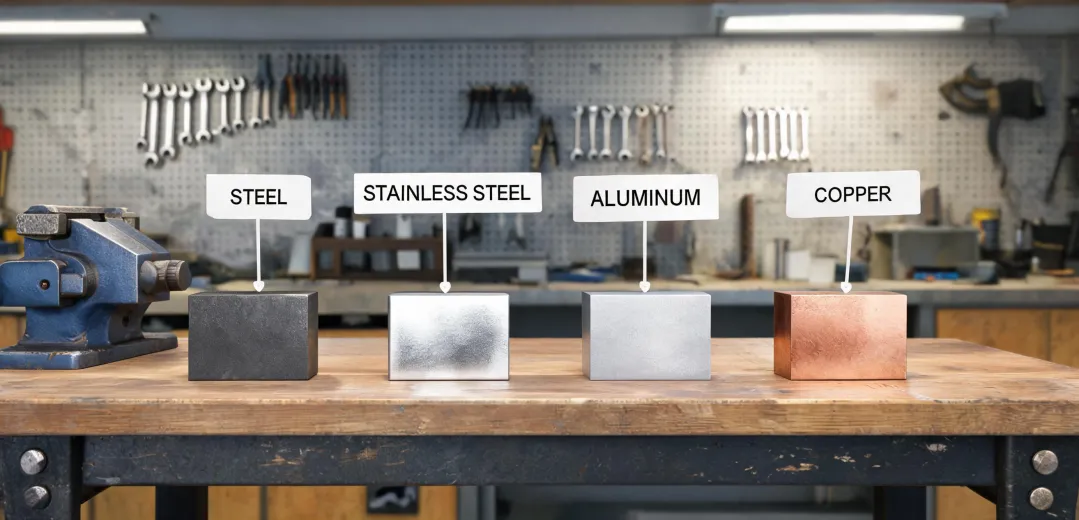
You're staring at a quote for a parking garage perforated metal wall, and the supplier lists four metals: carbon steel, aluminum, 304 stainless, and 316 stainless. The price spread is enough to make your budget committee nervous. Carbon steel is the cheapest; 316 is the most expensive. Which one do you order? If you pick based on today's price alone, you're betting that your garage's environment is gentle. But parking garages are rarely gentle. Deicing salt gets tracked in, rain and coastal air bring chlorides, and the wall has to stand up to it all for decades. The metal that looks like a bargain today can turn into a very expensive mistake in a few years. The real question isn't 'what's the cheapest sheet?' It's 'which metal will still be standing when the others are rusting away?'
The Real Question: Which Metal Won't Let You Down?
So, which metal won't let you down? That's the question you're really answering when you sign the order. A perforated wall looks simple — a sheet of metal with holes — but it's a structural and environmental member. It has to stand up to moisture, deicing salts, and physical bumps without losing its looks or its protective function. The answer depends less on what's cheapest right now and more on what the wall will face over the next ten, twenty, or thirty years. If you pick based on today's price alone, you're making a decision that your future maintenance budget will have to live with. The metal you choose has to keep its strength, its appearance, and its perforations open for airflow. Corrosion is the silent killer: it can start at a scratch or a cut edge, and once it pits, it's a health issue for the panel. That's why the first question isn't about metal grades — it's about the environment the metal will live in. Get that right, and the grade almost picks itself.
The decision matters because a parking garage wall lives in one of the most corrosive environments a building can offer. Winter road salt gets tracked in, air carries moisture, and if the garage is near the coast, chlorides are everywhere. Perforated panels let air and light through, but they also expose a lot of surface area to that corrosive bath. A cheaper metal can look fine at first, but corrosion doesn't wait. It can begin in months, not decades, and once pitting starts, the panel's strength and appearance go downhill fast. That's why the real calculation is full-lifecycle cost: purchase, installation, maintenance, repair, and replacement. The metal that costs a little more at the start can save a fortune over the life of the building. For example, a modest premium on stainless steel can be nothing compared to labor costs in a garage where replacement space is tight. In short, you're not buying a sheet of metal; you're buying years of performance. The cheapest option is often the most expensive system when you account for the full lifecycle.
What a Parking Garage Wall Actually Needs
Before you choose a metal, ask what the wall actually has to survive. It needs to resist corrosion from road salt and moisture. It needs to handle light impact from carts, doors, and the occasional bumper. It needs to keep its appearance for decades — nobody wants a rust-streaked garage. And it often needs to pass air and light for ventilation, which means the perforations stay open and clear. Which of these requirements is the hardest to meet? Corrosion resistance. It's the one that attacks the metal from within and the one you can't see coming. A dent is visible and fixable; corrosion can silently destroy the panel's integrity. Corrosion also breaks the coating that protects the metal, making things worse. So when you're specifying a wall, think beyond the initial look. Think about what the metal will face after years of weather, salt spray, and car exhaust. The surface that looks perfect on day one can be the surface that fails first when the environment turns aggressive.
The good news is that you have more than one metal option, and a supplier like Metal Supermarkets carries over 8,000 types, shapes, and grades of metal, from carbon steel to aluminum to stainless steel, and it provides same-day service and fast turnaround. That range exists for a reason: no single metal suits every environment. Some metals excel indoors, others thrive in marine air. For a parking garage, you need a metal that matches the specific conditions of the site. The breadth of choice is helpful, but it also means you have to think about what you actually need rather than just grabbing the first shiny sheet. The supplier's range lets you fit the metal to the job, but the decision about which metal fits is yours to make. Having access to many grades doesn't remove the need to define your corrosion environment; it simply ensures that when you know what you need, you can actually find it. That's the value of a broad inventory — it makes the right choice possible, not automatic. Quick turnaround also means you can get the exact material without long lead times, which keeps the project on track.
Carbon Steel, Aluminum, or Stainless: The Cost vs. Protection Tradeoff
Now compare the candidates side by side. Carbon steel is the lowest-cost option, but in a chloride-rich environment it rusts quickly and needs heavy coatings that don't last. Aluminum resists corrosion better and is light, but it's softer and some deicing salts can attack it. Stainless steel offers the best protection. The twist is that not all stainless is the same. 304 stainless handles atmospheric conditions and low-level chemical exposure well, but 316 stainless adds 2 to 3 percent molybdenum, which gives it strong resistance to chloride-based corrosion — the kind you get from road salt and sea air. That addition comes at a price: 316 typically costs 30 to 40 percent more than 304. That premium is the exact source of your dilemma. So you're not just choosing between 'cheap' and 'expensive' stainless; you're choosing between a metal that survives chlorides and one that doesn't. The evidence from real-world installations makes this distinction concrete: 304 stainless, despite being a good general-purpose grade, can fail completely when chlorides are present, while 316 is specifically designed for those conditions. For a parking garage, that difference decides whether the wall lasts 5 years or 30.
So there's the real fork: do you pay 30 to 40 percent more for 316 up front, or do you save that money and take your chances with 304? On a large garage wall, that premium can mean thousands of dollars. It's easy to say 'we'll save money now and see.' But that logic only holds if you're certain the environment is mild. Are you certain? Does the garage sit near the coast? Does winter bring heavy deicing salt? Does the ventilation system trap humid air? If any of those are true, the 'saving' is just a bet against corrosion. And as the next section shows, that bet can lose ugly. The price of 316 is concrete and visible at the time of purchase; the cost of a wrong choice is invisible until it appears on a repair invoice. A 30-40 percent premium on the material portion of the wall might be a small fraction of the total project cost, but it buys a fundamental property: resistance to the very thing that kills most metal walls. So the real question isn't 'can I afford 316?' It's 'can I afford the risk of not having it?' This is a comparison of risks, not just costs, and the decision framework hinges on the environment.
The $47,000 Mistake: Why 304 Failed in 18 Months
You don't have to imagine how bad it can get. In 2024, a chemical processing facility in Shandong Province installed 304 stainless steel cooling headers for a seawater heat exchange system. The procurement team chose 304 over 316 to save about $12,000 on material costs. Within 18 months, the pipe walls suffered complete chloride pitting. Not a little surface rust — complete pitting that compromised the system. The facility had to shut down, replace the headers, and manage hazardous waste. The total bill: roughly $47,000. That's a $12,000 saving turned into a $47,000 loss. The environment — seawater chlorides — turned a 'minor grade difference' into a catastrophic failure. And it happened fast: less than 18 months, which is barely a blink in the life of a building. For a parking garage with deicing salt or coastal air, the chemistry is similar. The metal that seemed 'good enough' at purchase time simply wasn't.
Run that math again. The saving was $12,000. The failure cost $47,000 — nearly four times as much. And that's only the direct cost; it doesn't count downtime or the hassle of managing a mid-life replacement. The material cost difference between 304 and 316 was trivial compared to the cleanup. That's the turning point: in a chloride-rich environment, 304 isn't a budget choice, it's a liability. The environment determines whether the grade difference matters. In dry, mild conditions, 304 might perform fine for decades. But in the presence of chlorides — sea air, deicing salt, industrial exposure — 304 can fail in under 18 months. The case flips a price-first decision into an environment-first decision. It's not about which metal is 'good enough' in theory; it's about which metal survives in your specific setting. The 30-40 percent premium for 316 buys a measurable property: molybdenum, 2 to 3 percent of it, which stops chloride ions from breaking down the protective oxide layer. That's the difference between a wall that lasts and one that pits. When you're standing in front of a $47,000 replacement bill, a $12,000 upfront saving feels like a bad joke.
Your Decision Rule: Match Metal to Environment, Not Just Price
So how do you actually decide? The rule is to match the metal to the corrosion environment, then calculate lifecycle cost, not just first cost. Start with the site: if it's coastal or salt-exposed, 316 is the default. If it's mild and dry, 304 may be enough. For truly protected interiors, you might consider aluminum or coated carbon steel, but those are rare in parking garages. And once you know the grade, you still need to source it. That's not usually the hard part — suppliers like Metal Supermarkets have over 135 locations across North America, so the metal is available. The hard part is committing to the right grade before you order. A wide inventory means you won't be locked into a single option; it also means you have to exercise judgment.
Here's a simple decision rule you can apply. If your garage is exposed to deicing salt, coastal air, or any high-chloride condition, specify 316 stainless. The 30-40 percent premium is insurance, and as the $47,000 failure case shows, it's cheap compared to the alternative. If the environment is genuinely mild, 304 is a reasonable middle ground. For truly protected interiors, you might get away with aluminum or coated carbon steel, but those are rarely the right call in a parking structure. When you buy, don't let the supplier talk you into a grade that doesn't fit the site — and don't let them force you to over-order either. Metal Supermarkets, for example, cuts metal to size while you wait and has no minimum order quantity, so you can buy exactly the grade and size you need without paying for a full sheet you don't need. The result: you match the metal to the real world, and the cost takes care of itself. And because the service is fast, you won't have to wait weeks for custom cuts.
The decision rule is simple: look at the environment first, then the price tag. In a chloride-rich garage, 316 is the only rational choice, because $12,000 in upfront savings doesn't cover $47,000 in replacement costs. The wall you specify today will be standing — or failing — long after the invoice is paid. Choose the metal that matches the real world, and the full-lifecycle cost will take care of itself. That's the whole lesson from the $47,000 mistake.

Jane Smith
I’m Jane Smith, a senior content writer with over 15 years of experience in the packaging and printing industry. I specialize in writing about the latest trends, technologies, and best practices in packaging design, sustainability, and printing techniques. My goal is to help businesses understand complex printing processes and design solutions that enhance both product packaging and brand visibility.