Metallic Bronze Hex Code: Don't Let Color Choose Your Alloy
Posted 2026-08-13 by Jane Smith
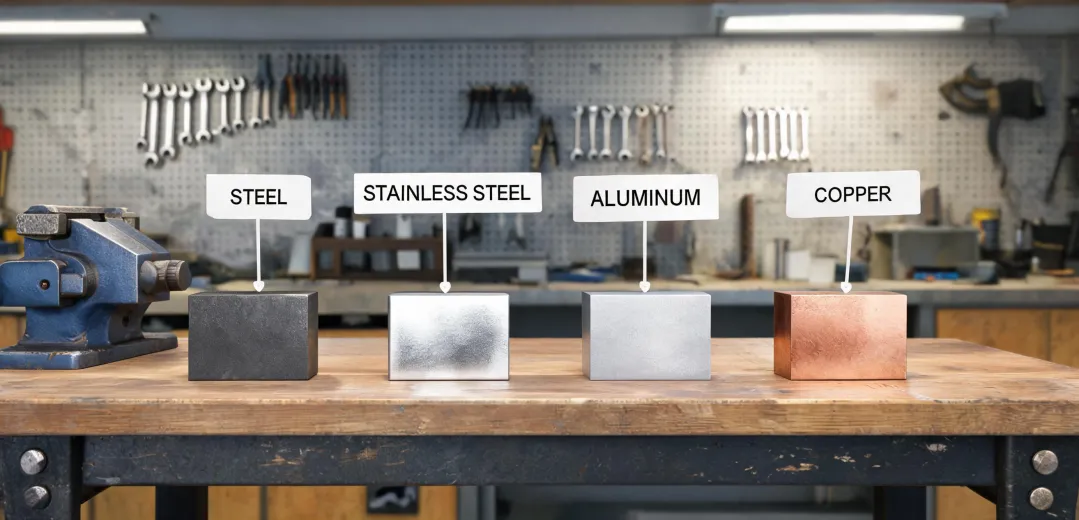
A metallic bronze hex code is a color, not a contract. Too many buyers treat a hexadecimal value as if it were a material specification, ordering 'bronze' by appearance and expecting the part to survive the application. It won't. Color tells you almost nothing about the alloy beneath the surface, and that gap between what you see and what you get is where corrosion, machining costs, and compliance problems live.
The Bronze Hex Code Is Not a Material Spec
Let's be blunt: a hex code is a paint chip, not a purchase order. When you search for 'metallic bronze hex code' and get a string like #CD7F32, you've found a color someone decided looked bronze. That string contains zero information about the copper-tin ratio, casting process, or saltwater tolerance. If you order material based on that code, you're choosing by the same logic as picking a steak by looking at a photograph. The first rule of buying bronze is to stop asking what it looks like and start asking where it will live and what it will carry. That distinction should drive your first conversation with a supplier, not the color chart.
You might argue that the reddish-brown metallic finish you see on screen is good enough and that any alloy matching it will do. But Xometry's guide points out that bronze's familiar appearance comes from a deliberate metallurgical mix—specifically copper and tin, with smaller amounts of elements like phosphorus or silicon. That mix gives the alloy its corrosion resistance and low metal-to-metal friction, and no hex code can recreate it. The color you admire is the surface result of that recipe, and substituting a similar-looking brass changes the entire performance profile. Even a perfect L*a*b* match can hide a drastically different microstructure. So the first thing to unlearn is that 'bronze-look' is a material category; it is a family of alloys with a shared visual trick, not a uniform product.
This is why we argue the hex code is the wrong starting point for any purchase. HMaking's machining guide states the functional stakes plainly: brass, often chosen for its bright gold color and low cost, suffers dezincification in saltwater, while bronze—the alloy with the reddish-brown hue—is specified for marine, anti-friction, and wear duties. When you pick 'bronze' by color, you may receive a brass part that fails at the worst moment, seizing or leaking because the environment pulled the zinc out of the grain structure. The material decision should be driven by the application's demands, not by the appearance you want. Remember: the same visual family includes copper, brass, and bronze; only alloy chemistry predicts behavior. The color is the last thing that should appear on your specification. That is the thesis we'll unpack in the sections ahead.
What Bronze Is: An Alloy, Not a Color
To spec bronze correctly, you need to know what the word names. Zintilon's machining guide explains that brass, bronze, and copper are all copper-based alloys; the differences are often invisible to the eye—exactly why a hex code is a trap. Brass is primarily copper and zinc; bronze is primarily copper and tin. That one-letter difference in the periodic table changes how the alloy reacts to seawater, wear, and machining stress. The guide stresses that naked-eye inspection is unreliable; you cannot look at a polished part and tell whether it's a free-machining brass or a bearing bronze. So the definition isn't academic trivia; it's the foundation of every decision that follows. When you ask a supplier for bronze, specify the grade family or at least the standard that matches your service conditions.
Bronze earns its reputation not through its color but through measurable properties. As Xometry's guide notes, bronze offers a combination of good corrosion resistance, low metal-to-metal friction, and decent ductility. Those three properties explain why you find bronze in bearings, bushings, and marine hardware: the alloy can slide against steel without galling, tolerate impact without cracking, and stand up to splash and salt. The same guide points out that this performance is tied to the specific copper-tin mix and the small additions that modify it—phosphorus for toughness, silicon for casting, aluminum for strength. None of that information is in a hexadecimal value. When you choose a bearing bronze, you're buying that friction behavior; when you choose a decorative bronze, you may be buying a different alloy altogether. The grade you specify determines which properties you receive.
The visual signal can also mislead you over time. Xometry's resource on bronze notes the alloy is no stranger to oxidation; you'll often see deeper brown or a greenish-blue patina on older products and structures. That patina is a protective layer, but it also changes the color away from the 'metallic bronze hex code' that started your search. If you selected a part purely to match a color, the part will be the wrong color after a season outdoors. The patina is a reminder that bronze is a living material—reacting with its environment—and that reaction is part of its long-term performance, not a defect to spec around with a color picker. Some alloys are formulated to develop a stable, even patina, while others stay bright under clear coatings; the difference matters if your product has a desired aged look.
Bronze vs. Brass: The Comparison That Should Drive Your Decision
The brass-versus-bronze decision is where the hex code falls apart. JLCCNC, a CNC machining shop, explains the practical consequence: the zinc in brass is what makes it easy to machine, because free-machining grades add internal lubricants for predictable chip breakage and easy high-speed spindle work. Bronze, by contrast, demands more respect from the tool; its tin-based matrix wears cutters more quickly, and the cutting behavior is less forgiving. That difference shows up in cycle time, tooling budget, and the surface finish you can hold. The shop frames the choice as a trade-off between tool wear tolerance and alloy behavior under machining stress. It's a metallurgical difference you can't see in a hex code. If your drawing says 'bronze color,' the shop can't know whether to quote a free-cutting brass or a bearing bronze; the cost difference is significant.
The mechanical data on the alloys reinforces the point. RivCut's copper and brass alloy chart lists a range of grades, separating brass from bronze as clearly as any specification sheet. Free-cutting brass C360 shows a 100 percent machinability rating, explaining why it's the default for high-volume screw-machine parts. Architectural bronze C385, despite its name, sits among the brass alloys in the chart with a machinability range around 55 to 75 percent. The tensile and yield ranges vary with temper and processing, but the takeaway is that strength and hardness are functions of chemistry and heat treatment, not color. You cannot read those numbers off a hex code. Machinability directly affects part cost: at 100 percent, a screw machine can cycle in seconds; at 55-75 percent, you pay for slower cuts and more tool changes.
Where you install the part is the final arbiter. HMaking's guide sums it up: never use standard brass in saltwater due to dezincification; always specify bronze. The guide describes marine fittings that seize because the zinc leaches out of brass, leaving a porous, brittle copper matrix. In a railing or a plumbing fixture exposed to moisture, that failure isn't cosmetic—it can mean a handrail that snaps or a valve that leaks. Bronze, with its tin-rich matrix, resists that attack and provides the anti-friction qualities needed for bearings and bushings running against moving parts. The application dictates the alloy, and the alloy dictates the price; that is the real decision chain. If your part is purely decorative and indoors, brass may save you money; if it will face salt spray, a heavy load, or continuous friction, bronze is the only defensible choice. The hex code cannot tell you which category you're in.
Where Buyers Get Burned: Failure Modes from Choosing by Color
The pattern repeats in procurement conversations. A buyer receives a spec saying 'metallic bronze finish,' interprets it as a material, and orders the cheapest alloy that looks close. The first burn comes when the part is machined: the chosen alloy may be too soft or too hard, causing tool breakage or poor surface finish. The second burn comes in service, when the part corrodes, wears, or fails to meet a regulatory standard. The root cause is the same in every case: color was used as a proxy for material properties and failed because color carries no mechanical or chemical guarantees. Recognizing that pattern is the first step toward fixing it. If your supplier pushes back on a vague 'bronze color' callout, that's a good sign; shops that warn you about the gap save you later.
The most common burn is environmental and the most well-documented. HMaking's guide warns about standard brass in saltwater because the zinc corrodes out in a process called dezincification, leaving a porous, damaged structure. They illustrate the consequence with marine fittings that seize due to saltwater corrosion. If you pick a brass fitting because it has the right 'bronze look' and mount it on a boat or sea wall, the threaded area can weaken and the fitting can lock solid. The visual sameness gave you a false sense of security. That is the exact failure the hex code cannot prevent; you need the alloy's tin content, not its hue. Even a small amount of salt spray can trigger it over time, which is why designers specify bronze for coastal railings and boat hardware.
Regulatory failure is the second burn, arriving on a hard deadline. Australia's National Construction Code, per ABCB guidance, says from 1 May 2026 only lead-free plumbing products can be certified and manufactured for drinking water systems, and from 1 May 2028 only lead-free products can be installed. That matters because many traditional brass alloys contain lead to improve machinability, and a 'bronze-colored' part made from leaded brass could violate the new law. Across the Atlantic, the European Drinking Water Directive already sets a lead limit of 10 µg/L, with no more than 5 µg/L in building supply water, per the Copper Development Association's summary. If your plumbing fixture is specified by color, you can't know whether the alloy meets these thresholds. The compliance risk is invisible in a hex code.
The Verdict: A Decision Rule for Buying Bronze
So here is our verdict: stop specifying bronze by its hex code. The metallic bronze hex code is a color tool for graphic designers, not a material spec for engineers or purchasers. A real specification names an alloy family or grade and pairs it with the environmental and loading conditions the part must survive. If a client hands you a hex code, treat it as a finish request, not a material, and ask the three questions that decide the alloy: where will it be installed, what will it touch, and what standards apply? The answers to those three questions, not the color chart, should determine the grade you buy.
Now the rule, applied in practice. First, name the environment: is the part outside, near salt water, or in a warm, humid building? If salt or constant moisture is in the picture, bronze is the defensible choice, and brass should be off the table. Second, name the mechanism: does the part rotate or slide against another metal? If there is metal-to-metal contact, choose a wear-resistant bronze and pay attention to its tin and nickel content. Third, name the compliance: is the part carrying drinking water? If yes, verify the alloy is lead-free and meets any applicable local standard for lead in plumbing. When you can answer those three, the hex code becomes irrelevant; you select the alloy that actually does the job.
Our final stand is simple: choose bronze based on the application, not the appearance. The metallic bronze hex code may win you a design award in a render, but it will not stop a marine fitting from seizing or a plumbing valve from failing a lead test. The buyers who get burned are those who believe a color chart can replace an engineering decision. The buyers who get it right ask about the alloy's composition, corrosion resistance, and compliance status before they talk about aesthetics. When you make that shift, you're no longer guessing—you're specifying. And that is the only version of 'bronze' worth buying. A specification naming a grade and service condition survives contact with the beach, factory floor, and regulator's office. That is the difference between a decorative palette and a purchasing decision.

Jane Smith
I’m Jane Smith, a senior content writer with over 15 years of experience in the packaging and printing industry. I specialize in writing about the latest trends, technologies, and best practices in packaging design, sustainability, and printing techniques. My goal is to help businesses understand complex printing processes and design solutions that enhance both product packaging and brand visibility.